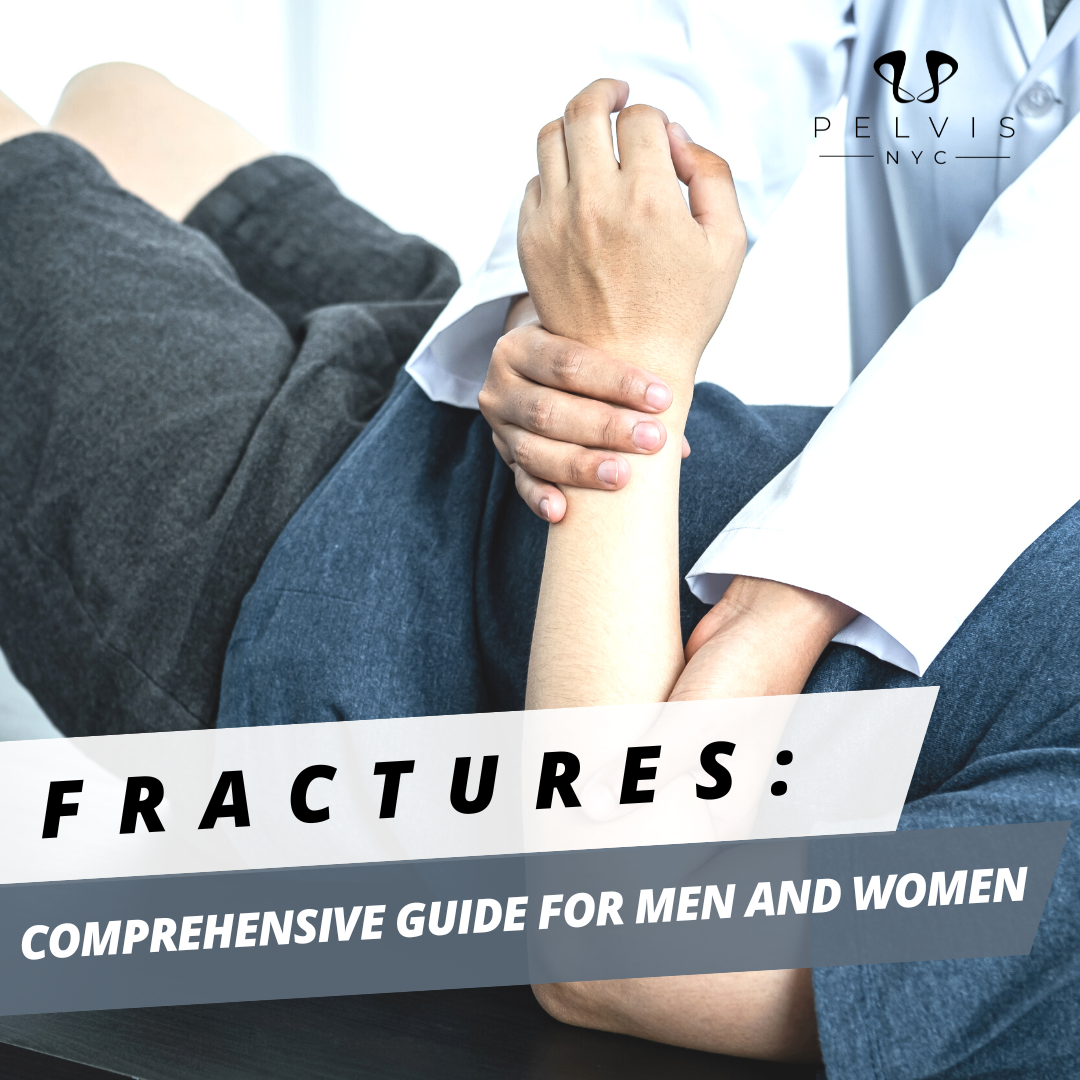
Whether you’re here out of curiosity or because you or someone you know is dealing with a fracture, I’m here to provide you with a comprehensive understanding of fractures and broken bones. I’m Adam Gvili, a Doctor of Physical Therapy, and I’m excited to share my expertise in this guide.
What is Fractures?
Fractures, commonly known as broken bones, are disruptions in the integrity of the bone structure. These can occur due to various reasons, including accidents, falls, sports injuries, and even underlying medical conditions like osteoporosis. The severity of a fracture can range from a minor crack to a complete break, each requiring its own approach to treatment and recovery.
Different Types of Fractures
Understanding the different types of fractures can help you make sense of your diagnosis and treatment options. Let’s explore some common fracture classifications:
Closed Fracture: In this type, the bone breaks, but the skin remains unbroken. It’s also known as a simple fracture.
Open Fracture: An open fracture occurs when the broken bone pierces through the skin. This type poses a higher risk of infection and requires immediate medical attention.
Greenstick Fracture: Common in children, this fracture occurs when the bone bends and partially breaks, resembling a green stick that has been partially snapped.
Stress Fracture: Often seen in athletes, stress fractures result from repeated stress and strain on a bone. They’re tiny cracks that can lead to more serious injuries if not properly managed.
Comminuted Fracture: This complex fracture involves the bone-shattering into multiple pieces, which can make treatment more challenging.
Spot the Break
Identifying the signs of a fracture is essential for timely and accurate treatment. So look out for these signs:
Big-time pain, especially when moving or putting weight on the hurt spot.
Swelling and have shades of bruising around the busted bone.
Limited range of motion and struggles using that body part.
Crooked bone
If the area feels tender and touchy.
If you suspect a fracture, don’t tough it out. Get it checked by a pro! A medical professional will conduct a thorough physical examination and often use X-rays or more advanced imaging to confirm the diagnosis and assess the extent of the injury.
Fractures? I Got Your Back
Folks of all ages and backgrounds have navigated this journey. While healing, your companions are rest and patience. However, there’s a special someone who plays a pivotal role in your recovery: your friendly neighborhood physical therapist.
Now, let’s delve into the vital role that Physical Therapists play in the recovery process. Once the initial medical treatment, such as casting or surgery, is complete, it’s time to focus on rehabilitation. Here’s how a Physical Therapist can help:
Individualized Treatment Plans: A Physical Therapist will create a personalized plan based on your specific fracture type, location, and overall health. This plan will outline exercises and therapies to promote healing and restore function.
Range of Motion and Strength: Fractures often lead to stiffness and muscle weakness. A Physical Therapist will guide you through exercises that gradually improve your range of motion and rebuild muscle strength.
Functional Restoration: Whether it’s regaining the ability to walk, lift objects, or perform daily tasks, a Physical Therapist will work with you to restore functional independence.
Pain Management: Managing pain is a crucial aspect of fracture recovery. Physical Therapists utilize various techniques to alleviate pain and discomfort during the rehabilitation process.
Education and Prevention: Physical Therapists also educate patients about proper body mechanics, posture, and techniques to prevent future injuries and promote overall bone health.
Conclusion:
There you have it! We’ve covered the basics of fractures, from spotting them to owning your recovery journey. Remember, stay positive, listen to your body, and you’ll be back on top in no time. For other questions, you may consult us at www.pelvis.nyc.
Hey there! If you’ve stumbled upon this blog, chances are you’re looking for answers about fibromyalgia in men. Well, you’ve come to the right place! I’m your friendly neighborhood Physical Therapist, and together, we’re going to explore the enigmatic world of fibromyalgia and how it affects us dudes.
What’s the Deal with Fibromyalgia?
Alright, let’s get down to it! Fibromyalgia is a real pain – literally. It’s a chronic condition that messes with our muscles and bones, causing widespread pain, fatigue, and a bunch of other annoying symptoms. It’s more common in women, but hey, we guys aren’t immune to it either!
Dude, Where’s My Energy?
You know that feeling when you wake up after a good night’s sleep, and you still feel like you’ve been hit by a truck? Yeah, that’s one of the joys of fibromyalgia. Our energy levels can take a serious nosedive, making it tough to keep up with our usual shenanigans.
Breaking the Myths
Now, there’s a lot of misinformation out there about fibromyalgia, and I’m here to set the record straight. Some folks still think it’s just in our heads, but trust me, it’s as real as that awesome touchdown you scored last week. It’s not just about being a “soft” dude – it’s a genuine medical condition!
The X-Factor: Mental Health
You see, fibromyalgia doesn’t just mess with our bodies; it can mess with our minds too. Dealing with constant pain and fatigue can be tough on our mental health. So, let’s talk about ways to keep our heads in the game and tackle this challenge head-on!
Bro-to-Bro Tips for Managing Fibromyalgia
Alright, enough with the gloomy stuff – it’s time for some action! As your PT buddy, I’ve got a bunch of tried-and-true tips to help you kick fibromyalgia’s butt. From exercise routines to diet hacks, we’ll cover all the bases to help you stay on top of your game.
When to Call in the Reinforcements
So, my dudes, fibromyalgia may be a mystery, but it’s not undefeatable. Sometimes, we need a little extra support, and that’s okay. With the right knowledge and support, we can take charge of our health and keep living life to the fullest. Asking for help from your PT pal can help provide bro-tastic tips. Remember, you’re not alone in this journey – together, we got this! Go to www.pelvis.nyc now for your inquiries and get a FREE 15-minute teleconsultation.
Yes—physical therapy for men is one of the most effective ways to treat pain, recover from injuries, and restore function. It addresses not only muscles and joints, but also the nervous system, helping men improve mobility, reduce pain, and regain control over their bodies—including pelvic health and sexual function.
Men’s pelvic health is a specialized area within physical therapy that focuses on addressing pelvic floor dysfunctions, with tailored assessments and treatments. Physical therapy for men’s health also considers the crucial role of connective tissue in supporting pelvic and abdominal organs, which impacts bowel, bladder, and sexual function. Ultimately, physical therapy supports overall health and well-being for men, enhancing quality of life and preventive care.
Why Physical Therapy for Men Is Often Overlooked
Despite its benefits, many men delay seeking care—even when symptoms affect daily life. Pelvic floor issues, for example, can affect men of all ages and backgrounds, leading to problems like pelvic pain, incontinence, and muscle dysfunction that impact quality of life. Many men never realize these are treatable conditions. That’s why a proper diagnosis by a healthcare professional is crucial to accurately identify pelvic floor problems and ensure effective treatment.
Common reasons include:
“I’ll just push through it”
Lack of awareness about treatment options
Belief that physical therapy is only for athletes or injuries
Stigma around pelvic health and sexual dysfunction
Pelvic floor issues—like urinary problems, chronic pain, or sexual dysfunction—are especially underdiagnosed. Many men never realize these are treatable conditions.
According to the National Institutes of Health (NIH), chronic pain (including pelvic pain) is often linked to muscle dysfunction and nervous system dysregulation, not just structural injury.
👉 That’s exactly what physical therapy addresses.
What Does Physical Therapy for Men Treat?
Physical therapy helps men recover, perform, and function better across a wide range of conditions. Physical therapy offers a wide range of specialized treatments tailored to address men’s unique health needs, including pelvic health issues and chronic pain management. Regular physical therapy is essential for maintaining optimal function, preventing future issues, and supporting long-term health and wellness.
👉 For example, after prostate surgery, such as radical prostatectomy or prostate removal, men may experience urinary incontinence and pelvic pain. Post-prostate surgery recovery therapy is essential for regaining urinary control and managing post-operative pain. Pelvic floor strengthening is crucial for regaining bladder control after surgeries like prostate removal, and pelvic floor therapy can help restore bladder control and sexual function.
7. Neurological Conditions
Including:
Stroke
Parkinson’s disease
Focus:
Balance
Coordination
Functional independence
8. Balance and Coordination Issues
Especially important as men age.
Benefits include:
Reduced fall risk
Improved stability
Better confidence in movement
9. Work-Related Injuries
Caused by:
Repetitive strain
Poor ergonomics
Heavy lifting
Treatment includes:
Pain relief
Movement correction
Injury prevention strategies
10. Pelvic Floor Dysfunction (The Most Overlooked Issue in Men)
One of the biggest gaps in men’s healthcare is pelvic health.
Pelvic health physical therapy is a specialized treatment for men with pelvic floor problems, including urinary incontinence, urinary frequency, urgency, and pelvic pain. The pelvic region includes the pelvic floor muscles and surrounding tissues, which support the bladder, bowel, and sexual function. When these muscles don’t work properly, it can lead to:
Chronic pelvic or anal pain
Urinary issues (urgency, leakage, frequency)
Sexual dysfunction (erectile dysfunction, premature ejaculation)
Post-surgical complications
Pelvic floor muscle exercises, such as Kegels, are used to strengthen pelvic floor muscles and pelvic muscles, improving muscle strength and muscle tone. Weak muscles and tight muscles can both contribute to pelvic floor dysfunction, and therapy addresses both through targeted strengthening and relaxation techniques.
Male pelvic pain, chronic pelvic pain syndrome, and musculoskeletal dysfunction can cause genital pain and are often linked to issues with the prostate gland, such as an enlarged prostate. Men can experience urinary or bowel issues, including frequent urgency, stress incontinence, and changes in bowel movements. Research indicates that around 10% of all men suffer from pelvic floor pain or discomfort at some point, and physical therapy can help reduce or eliminate these symptoms.
Why Pelvic Floor Physical Therapy Matters
Pelvic floor physical therapy is a specialized, evidence-based treatment that focuses on restoring muscle function—not just treating symptoms. Pelvic floor therapy, also known as pelvic rehabilitation, addresses conditions affecting the muscles and tissues of the male pelvic floor, including incontinence and pelvic pain. Effective therapy considers the underlying causes and specific concerns of each patient to ensure a comprehensive and personalized approach to care.
It can help:
Improve bladder and bowel control
Reduce chronic pelvic pain
Enhance sexual performance and satisfaction
Restore function after prostate or colorectal surgery
Treatment may include:
Pelvic floor muscle training (not just Kegels): Kegel exercises, which involve tightening and releasing the pelvic floor muscles, can improve bladder control and sexual performance, but may not be suitable for all patients, especially those with pelvic pain or muscle tension.
Relaxation techniques like diaphragmatic breathing: Diaphragmatic breathing helps relax the pelvic floor muscles and can alleviate pain and discomfort associated with pelvic floor dysfunction.
Biofeedback for muscle control: Biofeedback provides visual or auditory feedback to help patients gain better control over their pelvic floor muscles, enhancing awareness and improving muscle function.
Electrical stimulation: Electrostimulation methods, such as transcutaneous electrical nerve stimulation (TENS), are used in pelvic floor therapy to address underlying factors contributing to sexual dysfunction and improve muscle function.
Manual therapy to release tension: Manual therapy techniques, including joint mobilizations and myofascial release, are employed to improve muscle relaxation, strength, and coordination in the pelvic region.
Targeted exercises: Targeted exercises are personalized to improve pelvic muscle function, sexual health, and manage dysfunctions like erectile issues and premature ejaculation.
Exercises for bladder control and sexual performance: Therapy for men with pelvic health issues includes exercises specifically designed to improve bladder control and sexual performance.
Specialized exercises for erectile dysfunction and chronic pelvic pain: Specialized exercises, such as Kegels and diaphragmatic breathing, can strengthen or relax the pelvic floor to manage erectile dysfunction and chronic pelvic pain.
Nervous system regulation
⚠️ Important: Not all men need Kegels. In cases of tight or overactive muscles, relaxation—not strengthening—is the priority.
Can Physical Therapy Help After Surgery?
Yes—and for many men, it’s the missing piece of recovery.
Without proper rehabilitation, patients may continue to experience:
No two patients are the same. A pelvic floor physical therapist provides individualized care, addressing each patient’s specific concerns to ensure the most effective treatment.
Treatment may include:
Manual therapy
Strength and mobility training
Pelvic floor therapy
Nervous system regulation
Step 3: Home Exercise Program
You’ll receive exercises to continue at home.
This helps:
Speed up recovery
Maintain progress
Prevent recurrence
Step 4: Progress Tracking
Your plan evolves as your body improves.
Can Physical Therapy Help with Chronic Pain?
Yes—especially when pain has become long-term.
Chronic pain is often driven by:
Muscle tension
Poor movement patterns
Nervous system sensitivity
👉 Physical therapy addresses all three. Manipulative therapy techniques are commonly used for pain reduction, particularly in the pelvic region, to alleviate musculoskeletal complaints and associated discomfort.
According to the NIH, many chronic pain conditions are functional, meaning: ➡️ The body can be retrained to move and respond differently.
The Mind-Body Connection
Physical therapy isn’t just physical—it also impacts how your body responds to stress.
Meniscus tears are among the most common knee injuries—but also one of the most misunderstood. Many people fear that a “torn meniscus” automatically means surgery, crutches, or long recovery periods. The good news? Most meniscus tears respond exceptionally well to physiotherapy-based treatment, especially when addressed early.
A meniscus tear is a frequent sports injury, often occurring during high-impact activities or sudden knee twists. These injuries are commonly managed by sports medicine professionals, who specialize in diagnosing and treating sports-related knee conditions.
Whether you’re an athlete, a weekend runner, or someone who felt a painful twist stepping off a curb, understanding your treatment options can help you return to pain-free movement with confidence.
This comprehensive guide covers everything from symptoms and diagnosis to evidence-based physiotherapy techniques that promote healing and prevent re-injury.
What Is a Meniscus Tear?
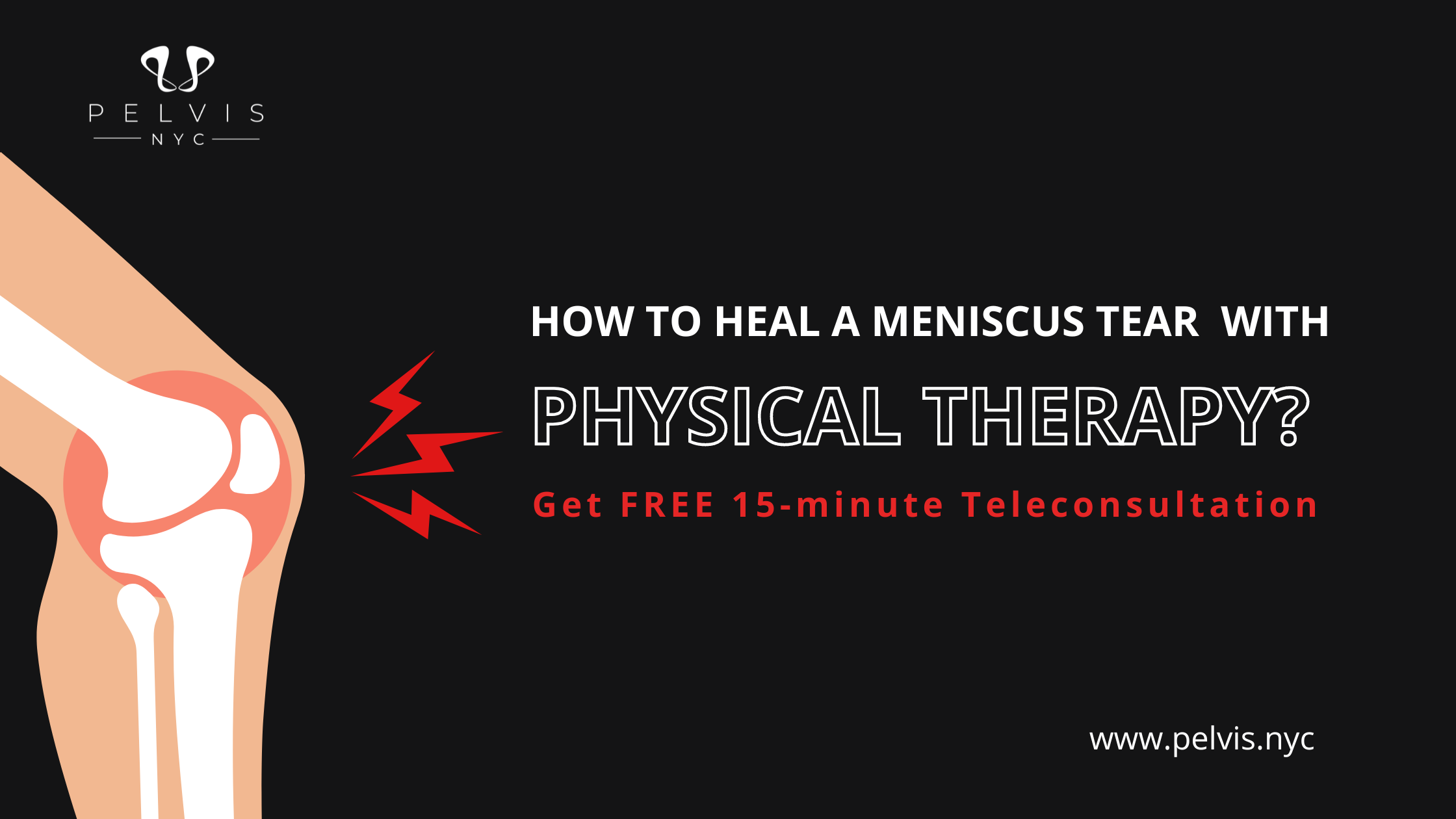
A meniscus tear is a type of meniscus injury and a common knee injury involving the cartilage cushion located on the tibial surface between your thighbone (femur) and shinbone (tibia). The meniscus consists of two main parts: the medial meniscus, found on the inside of the knee, and the lateral meniscus, located on the outside. Both play a crucial role in cushioning, stabilizing the knee joint, and distributing force during movement.
A tear may occur due to:
Acute trauma, such as a sudden twist or pivot (a traumatic injury)
Deep squatting or awkward landing
Sports-related impact, making it a common sports injury
Age-related cartilage weakening, leading to a degenerative tear
Repetitive stress from daily activities
Degenerative meniscus tears are caused by wear and tear over time, especially in older adults, and are often associated with chronic degeneration of the knee cartilage.
When the meniscus tears, the specific part of the meniscus that is affected can influence treatment options. You may feel:
A sharp, stabbing pain
A popping sensation
Swelling within hours
Difficulty bending or straightening your knee
Some people feel the knee “give out,” while others experience locking or catching.
Meniscus Tear Symptoms
Meniscus tear symptoms vary depending on the severity and location of the tear, but the most common include:
Experiencing significant pain in an injured knee may indicate a more severe meniscus tear and could require more aggressive treatment.
✔ Sharp Pain on the Inner or Outer Knee
Usually triggered by twisting, pivoting, or weight-bearing movements.
✔ Swelling or Stiffness
Swelling may appear immediately—or develop gradually over 24–48 hours.
✔ Clicking, Popping, or Locking
Mechanical symptoms happen when torn cartilage interferes with joint movement. Bucket handle tears, a specific type of meniscus tear, can cause the knee to lock when a portion of the meniscus flips into the joint space.
✔ Reduced Range of Motion
Many patients say the knee feels “stuck” or “tight.”
✔ Instability or Weakness
Feeling like the knee might give way during daily activities.
There are also two primary tear patterns:
1. Simple (Partial) Tear
Meniscus is still partially attached
Responds extremely well to physiotherapy
Less likely to require surgery
Examples of simple tear patterns include a longitudinal tear, which runs lengthwise along the meniscus, and horizontal tears, which are classified alongside other tear types such as radial tears.
2. Complex (Full or Multiple) Tears
Several tears or complete detachment
More likely to require surgical evaluation
Still benefit significantly from physiotherapy pre- and post-op
Complex tears often involve multiple tear patterns, such as radial tears, which can complicate both diagnosis and treatment decisions.
How a Meniscus Tear Is Diagnosed
Accurate diagnosis is essential for proper treatment. Diagnosis begins with a physical exam, where a physiotherapist or healthcare provider will assess the knee for signs of a meniscus tear, often using techniques like the McMurray test.
Imaging tests, such as magnetic resonance imaging (MRI), may be used to confirm the diagnosis and provide detailed visualization of the soft tissues in the knee, including the meniscus, cartilage, tendons, and ligaments.
Physical Examination
Includes palpation, swelling assessment, and joint line tenderness testing.
McMurray Test
The clinician bends and rotates your knee while monitoring for:
Pain
Clicking
Locking
A positive result suggests meniscus involvement.
The McMurray test is particularly useful for detecting tears in the medial meniscus, which acts as a cushion and stabilizer within the knee joint.
Apley Grind Test
You lie facedown while the examiner rotates and compresses the knee joint. Pain during compression is a sign of cartilage injury.
Imaging (If Needed)
MRI is the gold standard for visualizing cartilage tears.
X-rays help rule out fractures or arthritis.
However, many meniscus tears can be diagnosed without imaging, especially when symptoms are clear.
Meniscus Tear Treatment: Why Physiotherapy Is Essential
Physiotherapy is the first-line treatment for most meniscus tears and is highly effective for reducing pain, restoring function, and preventing future injury. Physical therapy is a cornerstone of conservative treatment for meniscus tears, and a physical therapist will develop a personalized rehabilitation plan to restore knee function.
A physiotherapy-based approach focuses on:
1. Reducing Pain and Swelling
Pain reduction is crucial early on so you can move comfortably. Treatment often includes:
Ice or heat therapy
Compression
Elevation
Gentle mobility exercises
Manual therapy techniques
In some cases, anti inflammatory medications and corticosteroid injections may be used to manage significant pain and swelling.
Inflammation limits mobility, so addressing it helps your knee heal faster.
2. Restoring Range of Motion
Restoring knee motion is a primary goal of physiotherapy. Physiotherapists use targeted joint mobilization and stretching to help you regain:
Knee extension (straightening)
Knee flexion (bending)
Restoring normal movement prevents long-term stiffness and compensatory injuries.
3. Strengthening Muscles Around the Knee
Weak muscles (especially the quadriceps) place more stress on the meniscus.
Your physiotherapist will use:
Quadriceps activation exercises
Glute strengthening
Hamstring and calf training
Balance and stability drills
These exercises protect the knee and help prevent future injuries.
4. Improving Knee Stability
This is one of the most important parts of meniscus tear treatment.
Improved stability is essential for optimal knee function, as it helps maintain proper knee mechanics and prevents symptoms like instability and weakness.
A stable knee depends on:
Strong muscles
Proper movement patterns
Coordinated balance
Physiotherapy helps retrain your knee to move correctly so the meniscus is protected during everyday activities.
5. Preventing Future Injuries
Physiotherapy doesn’t just heal the tear—it corrects the underlying issues that may have caused it, such as:
Muscle imbalances
Poor movement patterns
Weak glutes
Tight hamstrings
Lack of core stability
Preventing re-injury is a core goal of treatment.
Do Meniscus Tears Always Require Surgery?
No — most do not.
Only a small percentage of cases require surgical intervention, such as:
Large tears
Tears causing knee locking
Injuries in younger athletes
Tears in avascular (“poor blood flow”) regions
Surgical treatment options include meniscus surgery such as meniscal repair, meniscus repair, and partial meniscectomy. Symptomatic tears and certain meniscal tears may require surgical intervention, especially when conservative treatments have failed. Meniscal repairs are performed to preserve the meniscus whenever possible.
For advanced cases where previous treatments, including meniscus surgery, have not provided relief—such as in severe osteoarthritis or persistent knee pain—options like total knee replacement, knee replacement, or meniscus transplant may be considered. Meniscus transplant is a specialized procedure for younger patients with significant meniscus damage when donor tissue is available.
Even when surgery is required, prehabilitation (pre-surgery physiotherapy) improves outcomes and speeds post-op recovery.
Physiotherapy Techniques Used in Meniscus Tear Treatment
Here are some of the evidence-based techniques physiotherapists use to treat meniscus injuries:
Manual Therapy
Hands-on techniques to:
Improve joint mobility
Reduce swelling
Release muscle tension
Therapeutic Exercises
These typically include:
Straight leg raises
Wall sits
Terminal knee extension (TKE)
Step-ups and step-downs
Glute bridges
Exercise therapy is the core of long-term healing.
Balance and Proprioception Training
Improves joint stability and prevents future injuries.
Examples:
Single-leg balance
Bosu ball work
Dynamic control exercises
Gait Retraining
Corrects improper walking patterns that irritate the knee.
Modalities (Heat, Ice, Ultrasound, etc.)
Used to manage pain and swelling, especially early on.
Meniscus Tear Treatment at Home: What Helps and What Doesn’t
✔ What Helps
Ice for 10–15 minutes during the first 72 hours
Elevation to decrease swelling
Gentle mobility exercises
Avoiding deep squats, twisting, and running early on
Strengthening exercises recommended by your physiotherapist
✖ What Doesn’t Help
Ignoring the pain
Pushing through knee locking
Returning to sports too soon
Constant rest (leads to stiffness and weakness)
Activity modification is key—not complete inactivity.
Meniscus Tear Recovery Time
Recovery depends on:
Tear severity
Age
Activity level
Treatment consistency
Typical physiotherapy recovery times:
Small tears: 4–6 weeks
Moderate tears: 8–12 weeks
Complex tears: 12–16+ weeks
Recovery after meniscal repairs may take longer than other procedures, as tissue healing and gradual return to activity are essential for optimal outcomes. Following a structured rehabilitation plan, including physical therapy and prescribed exercises, is crucial for restoring knee function and achieving the best possible recovery.
Surgery may extend recovery but often leads to excellent long-term results.
Benefits of Working With a Physiotherapist
A physiotherapist doesn’t just treat the tear—they address the entire system that supports your knee.
If surgery is required, your physiotherapist can coordinate your care with an orthopedic surgeon to ensure you receive specialized treatment for your knee.
Benefits include:
Faster healing
Pain relief
Better mobility
Personalized exercise progression
Reduced risk of future injuries
Education on posture and body mechanics
Improved athletic performance
Most importantly, physiotherapists provide support and reassurance, guiding you every step of the way.
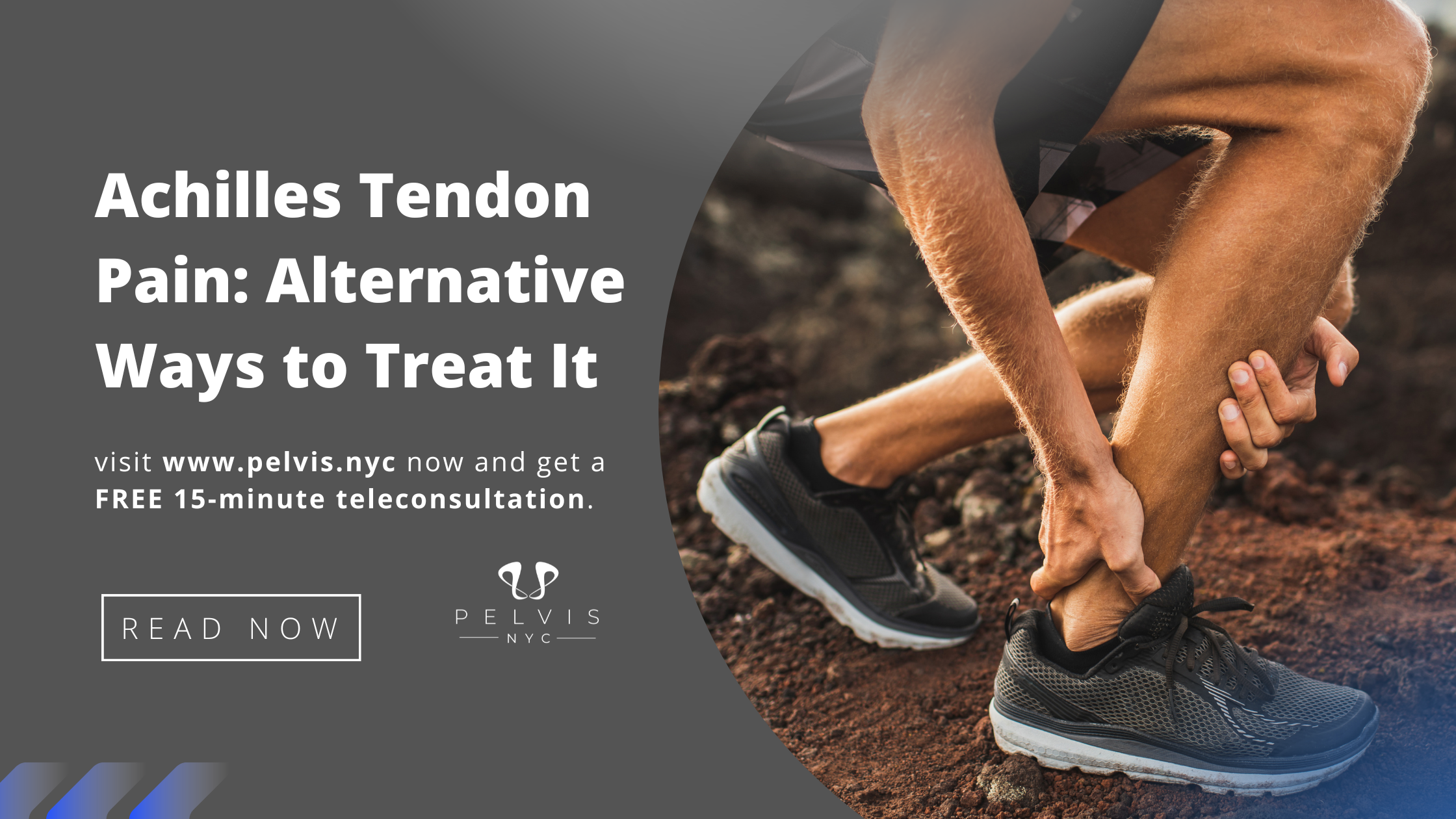
Anyone who’s ever done a lot of running, jumping, or even just walking on uneven surfaces has probably experienced Achilles tendon pain at one time or another, often due to conditions like Achilles tendinitis. The Achilles tendon is the strongest tendon in the body and is essential for movement such as walking, running, and jumping.
It can affect the activities you love and your daily routine. Risk factors such as age, overuse, and certain medical conditions can increase the likelihood of Achilles tendon pain.
If you are wondering about the fastest alternative way to treat Achilles tendon pain, stay tuned to our page! Achilles tendon pain can result from a variety of tendon problems, including inflammation, degeneration, and tears.
Achilles tendon injuries are often treated with RICER treatment, prescription of anti-inflammatory medicines, and sometimes can be managed without surgery. Extracorporeal shockwave therapy is also a noninvasive alternative treatment option for Achilles tendon pain.
Definition
The Achilles tendon is one of the most important and strongest tendons in the human body. The Achilles tendon connects your calf muscles to your heel bone and plays an essential role in helping you walk, jump, and run.
Two types of Achilles tendon injuries cause pain:
Achilles tendonitis: A condition that occurs when the Achilles tendon becomes inflamed.
Achilles rupture: This injury can be a complete or partial rupture of the Achilles tendon. A partial rupture refers to an incomplete tear or damage to the tendon, while a complete rupture means the tendon is fully torn.
What Causes Achilles Tendon Pain?
Since the Achilles tendon can withstand a lot of force, its strength comes at a price. It is one of the most commonly injured tendons in the body, especially when it becomes inflamed and swollen. Acute inflammation is the body’s immediate response to tendon injury, leading to swelling and pain.
Tight calf muscles can also contribute to increased stress on the Achilles tendon, leading to pain and inflammation. The Achilles tendon is located at the back of the lower leg and connects the calf muscles to the heel bone, playing a crucial role in transmitting force from the muscles to the heel.
Overuse or sudden force can result in tendon tears, which may range from small microtears to more significant injuries.
Overuse
Repeated stress on the Achilles tendon can cause irritation and inflammation. This is often seen in sports that require running and jumping, such as basketball and soccer. Overuse can also occur in activities like tennis that put a strain on your ankles and feet.
Overuse can lead to noninsertional Achilles tendinitis, where the fibers in the middle portion of the tendon become swollen and thickened. Non-insertional achilles tendinopathy is a chronic condition affecting the mid-portion of the tendon, often resulting from repetitive overuse.
Sudden Force
A fall or direct blow to the Achilles tendon can cause it to tear (rupture), leading to Achilles tendon ruptures. An acute rupture is a sudden and complete tear of the Achilles tendon that requires immediate medical attention. This usually happens in sports such as football or track, where there is a lot of running and sudden stopping. An acute tendon rupture is a severe injury that often results in a ruptured tendon, leading to loss of function and significant pain.
Tendinitis is an inflammation of the Achilles tendon resulting from overuse or injury. Symptoms include pain and swelling around the heel bone. Treatment typically involves rest, ice, and physical therapy. Surgery may be needed if tendinitis does not respond to these treatments. Chronic inflammation can lead to the formation of scar tissue, which may reduce tendon flexibility and impair function. Insertional Achilles tendinitis affects the lower portion of the tendon where it attaches to the heel bone and can involve bone spurs and calcification.
Achilles Tendon Injuries
Achilles tendons can suffer from a range of injuries, from mild strains to severe tears. Often, these injuries involve damaged tendon tissue, which may require specific treatments to restore normal function. Here’s a closer look at two common types:
Achilles Tendonitis
Achilles tendonitis involves inflammation due to overuse. Symptoms include pain and swelling near the heel. Treatment includes rest, ice, and physical therapy. Working with a physical therapist ensures that rehabilitation exercises are performed safely and effectively. Sometimes surgery is needed if conservative methods fail. In cases where conservative treatments fail, Achilles tendinitis surgery, such as tendon debridement, may be necessary to alleviate pain and restore function. Imaging such as MRI can help diagnose Achilles tendinitis and guide further treatment decisions.
Achilles Tendon Rupture
An Achilles tendon rupture is a complete or partial tear, often caused by a sudden force or severe overstretching. Surgery is typically required to repair the tear, and a walking boot may be used to immobilize the foot and protect the tendon during the initial phase of recovery. This is followed by extensive physical therapy to regain strength and function. Achilles tendinitis surgery, including procedures like tendon debridement and gastrocnemius recession, also plays a crucial role in treating severe injuries, with physical therapy being essential for recovery. The recovery period can vary depending on the severity of the rupture and the chosen treatment approach.
Diagnosing Achilles Tendon Pain
Getting to the root of Achilles tendon pain starts with a thorough and accurate diagnosis. When you visit a healthcare provider, the process usually begins with a detailed physical exam. Your doctor will look for signs of swelling, redness, or warmth around the Achilles tendon and check for tenderness along the tendon and at the insertional Achilles area. They’ll also assess the strength and flexibility of your calf muscles, as well as your ankle’s range of motion, to pinpoint any limitations or pain.
To further evaluate the condition of the tendon, imaging tests such as magnetic resonance imaging (MRI) or ultrasound may be recommended. These tools help visualize the structure of the Achilles tendon, making it easier to detect issues like insertional Achilles tendinitis, noninsertional Achilles tendinitis, or other forms of tendon pain. In rare cases, additional tests may be needed to rule out other causes of pain.
Accurately diagnosing Achilles tendon pain is essential for developing a personalized treatment plan that addresses your specific needs and helps prevent further tendon damage. Early and precise diagnosis can make a significant difference in your recovery and long-term tendon health.
Achilles Tendon Treatment
Achilles tendon injuries treated range from conservative measures like the RICER treatment (Rest, Ice, Compression, Elevation, and Referral) and prescription of anti-inflammatory medicines to the possibility of treatment without surgery. Nonsurgical treatment is often the first line of management for Achilles tendon injuries, including rest, physical therapy, and supportive devices. For milder injuries, rest, ice, and immobilization in a boot or splint may be sufficient. Heel lifts can also be used to reduce strain on the tendon and alleviate symptoms, especially in cases of insertional Achilles tendinopathy. More severe injuries may require complete rest followed by physical therapy to stretch and strengthen the muscles around the tendon. Strengthening the calf muscle is particularly important as it can help protect the Achilles tendon from further injury. Shoe wear modification, such as using supportive shoes or orthotics, can help manage Achilles tendon pain and prevent further injury. Achilles tendon pain treated with conservative methods can lead to significant relief for many patients.
In some cases, surgery is necessary to repair the tendon. The type of surgery depends on the extent of the injury, but it usually involves making an incision in the back of the leg and reattaching the tendon to the heel bone. Insertional Achilles tendinopathy affects the area where the tendon attaches to the heel bone, known as the Achilles tendon insertion, and may require specific treatment strategies. Recovery from surgery can take several months, but most patients return to normal activity levels eventually.
Physical Therapy for Achilles Tendon Injury
Physical therapy is one of the most effective alternative ways to treat an Achilles tendon injury. It involves exercises and techniques that help speed up the healing process. Physical therapy improves flexibility and range of motion. Many exercises involve movements such as standing on tip toes to strengthen the Achilles tendon. Specific exercises lengthen and strengthen the tendons. The soleus muscles, along with the gastrocnemius, play a key role in Achilles tendon function and rehabilitation. A combination of both is often the most successful approach to rehabilitation following an Achilles tendon injury.
Starting physical therapy as soon as possible after the injury maximizes the chances of a successful recovery. Delaying treatment can result in the tendon becoming stiff and difficult to stretch. A comprehensive rehabilitation program addresses the entire foot and ankle to ensure optimal recovery.
In some surgical cases, a tendon from the big toe area may be used to restore function after extensive Achilles tendon damage.
Preventing Achilles Tendon Injuries
Prevention is key when it comes to Achilles tendon injuries. By taking proactive steps, you can protect your Achilles tendon from overuse injuries and reduce the risk of developing tendon pain. One of the most effective strategies is to regularly stretch your calf muscles, especially before and after physical activity. This helps maintain flexibility and reduces tension on the tendon.
Strengthening exercises, such as heel raises and calf presses, can build resilience in both the Achilles tendon and the surrounding muscles. Wearing supportive shoes and, if needed, using orthotics can provide additional stability and cushioning, minimizing repetitive stress on the tendon.
It’s also important to gradually increase the intensity and duration of your workouts to avoid overloading the tendon. Taking regular breaks and listening to your body can help prevent repetitive strain and overuse injuries like Achilles tendinosis. By incorporating these habits into your routine, you can keep your Achilles healthy and pain-free.
The Role of Medication in Treatment
Medications can play a valuable role in managing Achilles tendon pain and supporting your recovery. Anti-inflammatory medications, such as ibuprofen or naproxen, are commonly used to reduce pain and swelling in the affected area. These anti-inflammatory drugs work by targeting the body’s natural response to injury, helping to ease discomfort and promote healing.
In some cases, your healthcare provider may recommend corticosteroid injections to address persistent inflammation and pain. However, these injections are used with caution, as they can sometimes weaken the tendon and increase the risk of rupture. It’s important to consult with your doctor before starting any medication for Achilles tendon pain, so you can find the safest and most effective treatment plan for your needs.
Surgical Intervention
While most Achilles tendon injuries respond well to nonsurgical treatments, surgery may be necessary for severe cases—such as a complete rupture or chronic tendonitis that doesn’t improve with conservative care. The main goal of surgical intervention is to repair or reconstruct the damaged tendon, restoring its strength and function.
There are several surgical options available, including open repair, percutaneous repair, and minimally invasive techniques. The choice of procedure depends on the type and severity of the Achilles tendon injury, as well as your overall health and activity level. After surgery, a structured rehabilitation program—often involving physical therapy, stretching, and strengthening exercises—is essential for a successful recovery. With the right approach, most people can regain full function and return to their favorite activities.
Coping with Chronic Achilles Pain
Living with chronic Achilles pain can be challenging, but there are effective ways to manage symptoms and improve your quality of life. Modifying your daily activities to avoid movements that aggravate the tendon—such as excessive running or jumping—can help reduce pain. Wearing supportive shoes and using orthotics can also provide relief by minimizing stress on the Achilles tendon.
Physical therapy is a cornerstone of chronic pain management, focusing on improving flexibility and strengthening the calf muscles to support the tendon. Simple pain management techniques, like applying ice or heat, can help control inflammation and discomfort. Some people also find significant relief through alternative therapies, such as acupuncture or massage, which can promote healing and relaxation.
By working closely with your healthcare provider and adopting these coping strategies, you can better manage chronic Achilles pain and maintain an active, fulfilling lifestyle.
Where to Ask for Help?
At Pelvis NYC, our physiotherapist, Dr. Adam Gvili, tailors programs specifically designed to your needs. Many patients with orthopedic problems have recovered under his care.
For more information, visit Pelvis NYC, and you can receive a complimentary 15-minute teleconsultation if you book now.
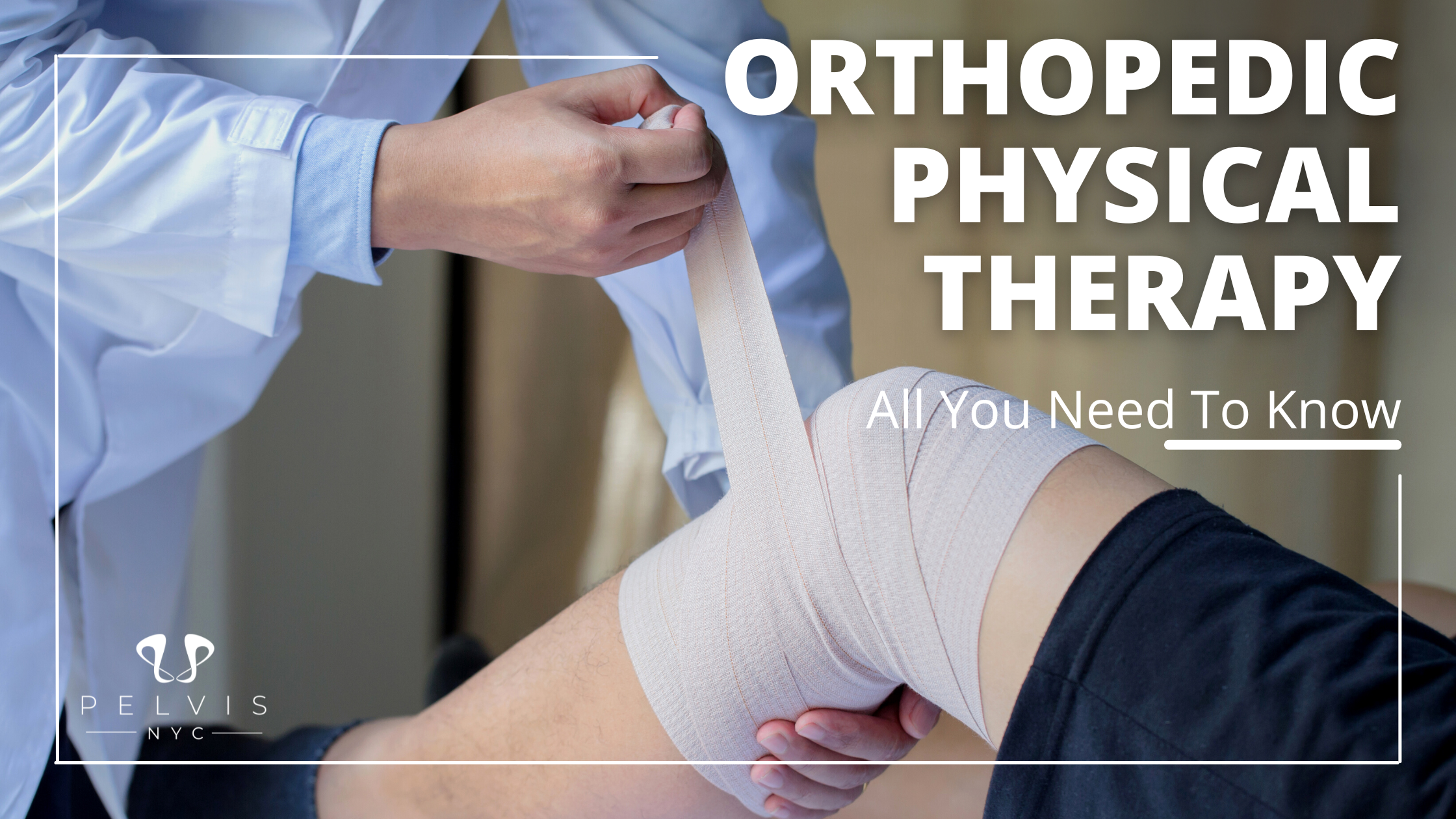
If you are like most people, you probably use your orthopedic system every day without even realizing it. Moreover, these work all together to keep you moving and functioning at your best. When one of these parts starts to cause pain or dysfunction, you will feel like your muscles, bones, joints, tendons, and ligaments are not functioning properly. However, with the help of orthopedic physical therapy, things can back on track. Orthopedic physical therapy restores function and relieves pain in the joints, muscles, and ligaments, and increases mobility and flexibility.
So if you are experiencing joint pain or problems with mobility, don’t hesitate to seek out the help of an orthopedic physical therapist. With the right treatment plan in place, you can enjoy improved function and reduced pain!
What does an orthopedic physical therapist do?
The goal of orthopedic physical therapy is to restore function to the musculoskeletal system, including joints, tendons, ligaments, and bones. It can be used to treat a wide variety of conditions, including back pain, neck pain, arthritis, sports injuries, carpal tunnel syndrome, and more. One of the benefits of orthopedic physical therapy is that it can be tailored specifically to meet your needs.
Physiotherapists who specialize in orthopedics can integrate the proper treatment of your injury or condition with the functioning of all other bodily systems- especially your neurological and cardiovascular systems. Also, they will work with you to create a treatment plan that targets your specific injury or condition. They may use a variety of techniques such as massage, stretching exercises, electrical stimulation, or heat/cold therapy.
With their help, you can achieve an easy return to your normal daily activities after surgery, injury, or sickness.
Conditions Treated
The following types of musculoskeletal conditions can benefit from orthopedic physical therapy:
There is no one-size-fits-all answer to this question, as the number of sessions required will vary depending on the specific condition being treated. Also, the number of physical therapy sessions required for successful orthopedic rehabilitation depends on the diagnosis, intensity of symptoms, and other factors.
In addition, the initial evaluation will typically involve a thorough assessment of the patient’s condition. Based on this, the physical therapist will develop a treatment plan that may include exercises, stretching, manual therapy, and other modalities. The frequency and duration of each session will be tailored to the individual patient’s needs.
Continuing physical therapy may improve patients’ conditions quickly and they may notice an improvement in their range of motion, strength, and pain control. So consult an orthopedic physiotherapist now and achieve independence and a pain-free lifestyle.
How Can I get the best results?
These are the things that can help you maximize your physical therapy sessions:
Work with a physical therapist you trust and feel comfortable with.
If you have questions about any part of your treatment plan, ask.
Set clear, realistic goals you can measure
Assess your pain tolerance.
Do not miss any appointments, even if you feel better.
Your Partner
At Pelvis NYC, we are committed to helping our patients live pain-free lives. We specialize in the treatment of orthopedic conditions and injuries, and our goal is to help you ease your symptoms and give an improvement in your life. Furthermore, our team with a highly skilled therapist, Dr. Adam Gvili, will work with you to develop a treatment plan that tailors your individual needs. We offer a variety of services that can help relieve pain, improve mobility, and increase strength and flexibility. In addition, we provide education and support to help you make lifestyle changes that will improve your overall health and well-being.
So if you are suffering from orthopedic pain, we encourage you to contact us today to schedule a consultation. We are confident that we can help you find relief and finally, get back to living your life to the fullest.
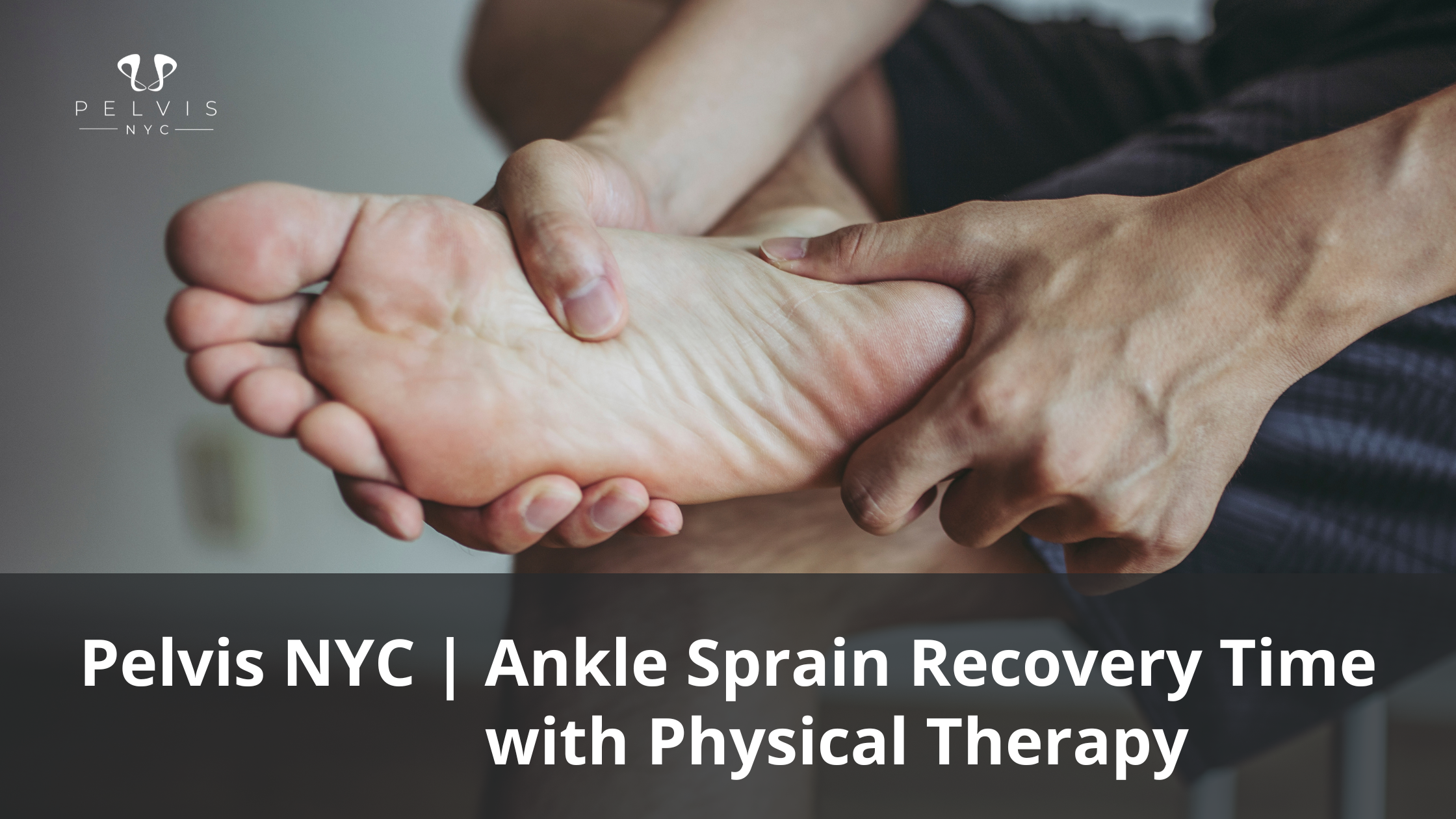
It’s no secret that an ankle sprain takes a lot of weeks to recover. But with physical therapy, we can significantly reduce the time frame. Pelvis NYC can speed up your ankle sprain recovery time and give exercises that can improve your range of motion and strength.
If interested in how physical therapy can help you recover from an ankle sprain, please contact us today at www.pelvis.nyc. We would be happy to schedule a consultation with you. And if ever you want to learn more, continue reading this blog.
Ankle Injury
Ankle sprains are a common sports injury. The ligaments that stabilize the ankle can be stretched or torn when the foot twists or turns beyond its normal range of motion. This can happen when landing after a jump, making a sudden change in direction or stepping on an uneven surface. While ankle sprains can occur in anyone, they are most common in athletes who participate in sports. Examples are running and jumping, such as basketball, football, and soccer.
Most people recover from an ankle sprain within four to eight weeks with proper treatment. If you suffer from an ankle sprain and are looking for ways to speed up your ankle sprain recovery time, look no further! Physical therapy can help reduce swelling, regain strength and range of motion, and get you back on your feet quicker.
To reduce your risk of suffering an ankle sprain, it is important to warm up properly before participating in any physical activity. Wearing supportive shoes and using caution when walking on uneven surfaces can also help to prevent this type of injury.
Home Remedy
A sprained ankle can range from mild to severe depending on the case. Symptoms typically include pain, swelling, bruising, and difficulty bearing weight on the affected foot. In some cases, the ligament may be completely torn, which can result in instability of the joint. While rest, ice, and elevation are usually effective in treating a mild sprain, more severe injuries may require immobilization of the joint or surgery to repair the ligaments. If you suspect you have sprained your ankle, you must see a doctor or physical therapist. They can help give an accurate diagnosis and accelerate your ankle sprain recovery time.
Treatment with Physical Therapy
While most ankle sprains are minor and heal within a few weeks, some require more extensive treatment. The good news is that physical therapy is one option that can help speed up the ankle sprain recovery time healing process and reduce pain. By working with a physical therapist, patients can learn exercises that stretch and strengthen the muscles and ligaments around the ankle. These exercises and treatments are designed to improve range of motion, flexibility, strength, and proprioception (the ability to sense the position of one’s body in space). In addition, electrical stimulation or other modalities may be used to decrease inflammation and promote healing.
If you’re looking for first-rate physical therapy services in New York, look no further than Pelvis NYC. We will customize you with a proper treatment plan to help you make a full recovery in no time. So whether you’ve suffered an ankle sprain or just need some general help getting back into shape, our skilled doctor of physical therapy can help. Trust us – your body will thank you!
Contact us today for more information about our physical therapy services. We’ll help you get back to doing the things you love as quickly as possible!
If you’ve ever heard the old saying, “a sprain will heal on its own,” it’s time to let that myth go. A sprained foot is more than just a minor inconvenience—it’s an injury that can affect your mobility, independence, and overall quality of life. Returning to activity too soon or not treating a sprained foot properly can lead to further damage, worsening the injury and prolonging your recovery.
The good news? You don’t have to deal with the pain and uncertainty on your own. Physical therapy for a sprained foot can speed up your recovery, reduce pain, and help prevent the same injury from happening again. And no, physical therapy isn’t just for professional athletes. Whether you want to get back to running, walking without pain, or simply moving with more confidence, the right treatment plan can make all the difference.
Introduction to Foot Injuries
Our feet take a beating every single day—walking, running, exercising, or just moving around the house. Because of this, foot injuries are among the most common musculoskeletal problems. The foot and ankle are made up of multiple joints, bones, and ligaments that work together to provide stability and allow for a wide range of movement. Ligaments are tough bands of fibrous tissue that connect bones—specifically, they connect two bones at a joint—and are essential for joint stability.
One of the most frequent injuries is a foot sprain, which happens when the ligaments are stretched or torn. A sprain occurs when a joint is twisted or overstretched, often during sports, walking on uneven surfaces, or wearing improper footwear—these are common causes of foot sprains. Sprains can involve stretching or tearing of the ligament, and tears can be partial or complete. For example, a Grade II sprain involves a ligament that is partially torn. Sprains can also occur in the middle part of the foot, especially after twisting or landing awkwardly. Injuries to the big toe, such as turf toe, are also possible and often occur in athletes when the big toe is forcibly bent backward.
Strains and sprains are both common in the foot and ankle, but they affect different tissues: sprains involve ligaments, while strains affect muscles or tendons. Ankle injury is another common injury related to foot sprains. Sprains and strains can have similar symptoms, such as pain, swelling, and bruising. Severe pain and a swollen foot may indicate a more serious injury, such as a complete ligament tear or even a foot fracture.
Depending on how severe the sprain is, symptoms may include:
Sharp or throbbing pain
Swelling and tenderness
Bruising or discoloration
Difficulty moving the foot or bearing weight
Understanding what type of injury you’re dealing with—sprain, strain, or fracture—plays a huge role in choosing the right treatment. A foot fracture may present with similar symptoms and may require imaging to confirm. Doctors are the professionals who diagnose and treat these injuries. They will often perform a physical examination to assess tenderness, range of motion, and stability, and may order imaging tests to check for bone or ligament damage.
Ankle Sprains and Sprained Ankle
Ankle sprains are among the most common injuries, affecting people of all ages and activity levels. A sprained ankle happens when the ligaments that support your ankle are stretched or torn, usually as a result of twisting, rolling, or turning your ankle in an awkward way. This can occur during sports, walking on an uneven surface, or even just missing a step.
Sprains vs. Strains: What’s the Difference?
People often confuse sprains and strains, but they affect different structures in the body:
Sprain: Injury to a ligament, often caused by twisting, rolling, or overstretching a joint. In the case of ankle sprains, the ankle ligaments—fibrous tissues that connect bones and provide stability to the ankle joint—are most commonly affected.
Strain: Injury to a muscle or tendon, usually from overuse or sudden force. Strains happen less frequently than sprains in the foot and ankle.
In the foot and ankle, sprains are much more common. Strains happen less frequently than sprains in these areas. A simple misstep on uneven ground, a bad landing during exercise, or even walking in unsupportive shoes can cause it.
Sprains are typically classified into three grades:
Grade I (Mild): Ligament is stretched, causing minor pain and swelling.
Grade II (Moderate): Partial tear, leading to more significant pain, bruising, and difficulty walking.
Grade III (Severe): Complete ligament tear, often requiring longer recovery and sometimes bracing or casting. More severe sprains may require longer recovery times and specialized treatment, such as immobilization or physical therapy.
In rare cases, complications such as chronic pain, instability, or other long-term issues can occur.
How Do You Know If You Have a Sprained Foot?
The most obvious sign of a foot sprain is pain that comes on suddenly after a twist, fall, or awkward movement. Other common symptoms include swelling, bruising, and tenderness around the joint.
If you’re unable to bear weight on your injured foot, or the pain feels severe and sharp, it could be more than just a mild sprain. In these cases, it’s important to get a professional evaluation. A doctor or physical therapist may order imaging, like an X-ray, magnetic resonance imaging (MRI), or CT scan, to rule out fractures and assess soft tissue injuries.
At-Home Care for a Sprained Foot
For mild sprains, the tried-and-true R.I.C.E. method can help relieve pain and speed up recovery:
Rest: Limit weight-bearing activities and allow your ligaments time to heal.
Ice: Apply an ice pack for 15–20 minutes at a time, a few times a day, to reduce swelling.
Compression: Wrap your foot with an elastic bandage (snug, but not too tight).
Elevation: Prop your foot up on pillows to reduce fluid buildup and swelling.
If your symptoms do not improve or if the injury is severe and you cannot bear weight, seeking medical care is important. A healthcare provider may order X-rays to check for fractures, dislocations, or signs of arthritis, and to identify more serious injuries that require specialized treatment.
These steps are helpful in the early stages, but they won’t always restore full strength and stability to your foot. That’s where physical therapy comes in.
When Should You See a Physical Therapist?
So, how do you know when it’s time to get professional help? Here are a few signs:
Pain is severe or lasts more than a few days
You can’t put weight on your foot without limping
Swelling and bruising aren’t improving
The foot feels unstable or weak when walking
Body twists during physical activity, such as sudden changes in direction or awkward landings, can increase the risk of spraining the foot or ankle. Recognizing these risk factors can help you seek timely care.
Physical therapy for a sprained foot focuses on more than just pain relief. A therapist will guide you through:
Gentle range-of-motion exercises to restore flexibility
Strength training to support the foot and ankle
Balance training to prevent future sprains and address issues that contribute to spraining, such as poor balance or weak muscles
Gait retraining to help you walk properly without compensation
In some cases, a brace or supportive footwear may be recommended. Your PT will also design a custom home exercise program so you can continue healing between visits.
How Long Does Recovery Take?
Recovery depends on the severity of your sprain, your age, and your overall health. On average:
Mild sprains: 4–6 weeks
Moderate sprains: 6–8 weeks
Severe sprains: 3–4 months
With consistent physical therapy, many people are able to return to normal activities faster and with less risk of re-injury.
Foot and Ankle Health
Taking care of your foot and ankle health is key to avoiding painful injuries like foot sprains and ankle sprains. Start by choosing shoes that fit well and provide proper support—this is especially important if you spend a lot of time on your feet or exercise regularly. Avoiding high-heeled shoes and being cautious on uneven surfaces can also help prevent sprains and strains.
Incorporate stretching and strengthening exercises into your routine to keep the muscles and ligaments in your foot and ankle flexible and strong. Simple activities like calf raises, ankle circles, and balance exercises can make a big difference in your overall stability. Pay attention to your body’s signals and be mindful of your movements, especially during physical activity or when walking on unfamiliar terrain.
Regular check-ups with your doctor or a podiatrist can help catch any potential issues early, before they turn into more serious injuries. By staying proactive and making foot and ankle health a priority, you can reduce your risk of sprains, strains, and other common injuries—keeping you active and pain-free for the long run.
Preventing Future Foot Sprains
The best treatment is prevention. Here are some practical ways to protect your feet and ankles:
Wear supportive shoes that fit well (avoid flimsy or overly high heels). Improper shoes, such as those that do not fit properly or are not designed for your activity, can increase the risk of sprains.
Maintain good physical condition by keeping your muscles strong and flexible, as poor physical condition can make you more susceptible to foot and ankle injuries.
Warm up before exercise and stretch regularly.
Strengthen your ankles and calves with simple stability exercises.
Avoid running or walking on uneven ground when possible.
Building strength and stability in your lower body reduces the chances of another painful sprain.
Final Thoughts: Do You Need PT for a Sprained Foot?
The short answer is yes—especially if you want to heal faster and lower your risk of re-injury. While mild sprains may improve with rest and home care, physical therapy provides a safer, more effective path to long-term recovery.
If you’re struggling with foot pain or unsure about your injury, don’t wait until it gets worse. AtPelvis NYC, our team can evaluate your foot, create a personalized treatment plan, and help you get back on your feet—literally.
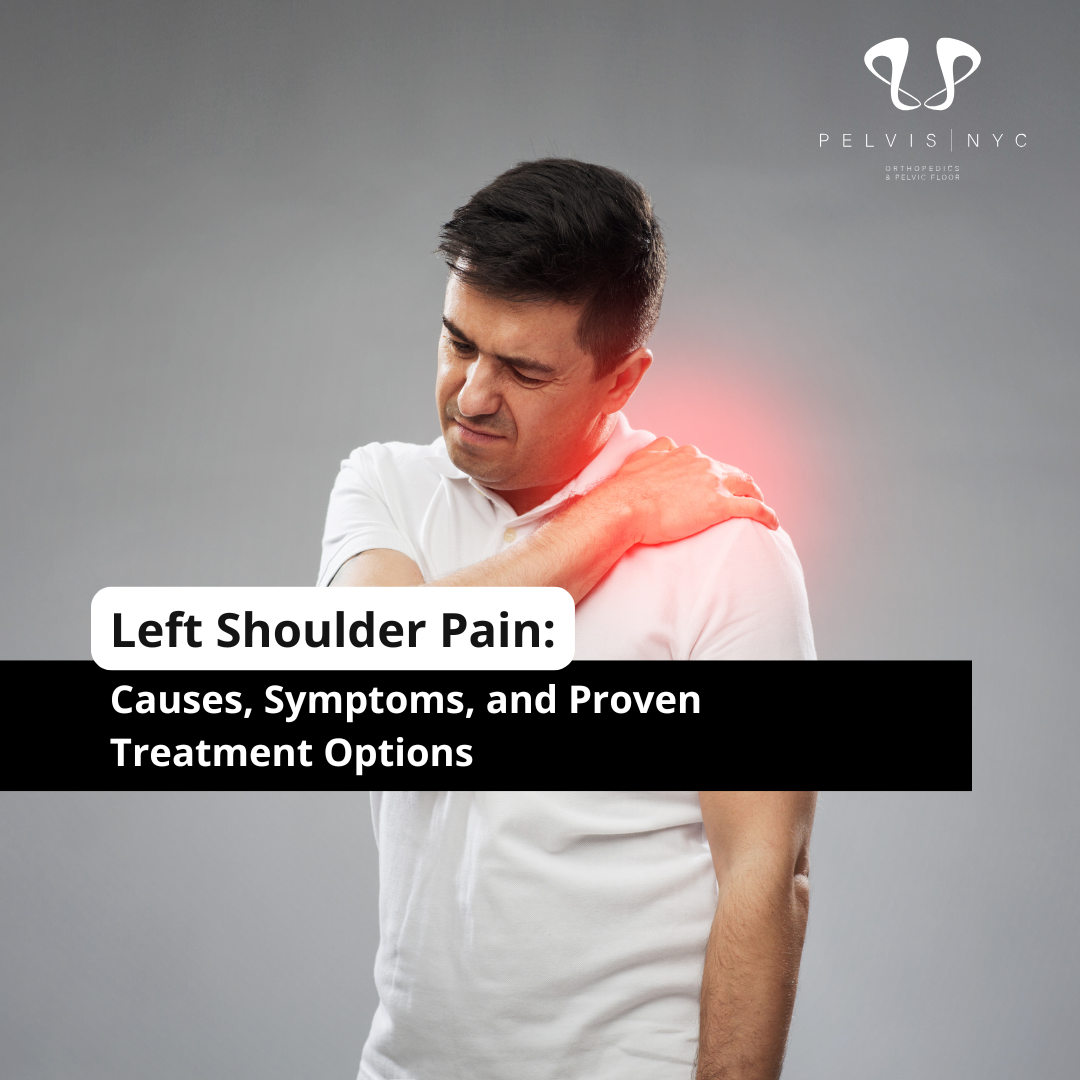
Have you ever woken up with left shoulder pain that makes it hard to lift your arm or even sleep comfortably? You’re not alone. Shoulder discomfort is one of the most common musculoskeletal complaints. But when it specifically occurs in the left shoulder, it can be confusing—sometimes it’s just a muscle strain, while other times it could signal something much more serious, like a heart attack. In some cases, pain in the left shoulder is called referred pain, where the discomfort is actually coming from another part of the body, such as the heart. Left shoulder pain can be a sign of a heart problem, and recognizing referred pain is important for accurate diagnosis and timely treatment.
This guide will walk you through everything you need to know about left shoulder pain—its causes, symptoms, treatment options, and when to seek immediate medical attention.
Left Shoulder Pain: Why It Matters
The left shoulder is a complex ball-and-socket joint made up of bones, muscles, tendons, and ligaments. Because of its wide range of motion, it’s more vulnerable to injuries and wear-and-tear conditions than many other joints in the body.
Pain in the left shoulder can range from dull stiffness to sharp, shooting sensations, including sharp pain or sudden pain that may signal more serious underlying issues such as nerve compression or even heart problems. Sometimes the discomfort is limited to the shoulder itself, while in other cases it radiates down the arm or up into the neck. Some people may also experience shoulder blade pain, which can be related to problems with the muscles or tendons around the shoulder, such as tendonitis or muscle tears. Understanding the type of pain you’re feeling can give important clues about the underlying issue.
Anatomy of the Shoulder Joint
The shoulder joint, known medically as the glenohumeral joint, is one of the most complex and mobile joints in the human body. It’s a classic ball-and-socket joint, where the rounded head of the upper arm bone (humerus) fits into a shallow socket in the shoulder blade (scapula). This unique structure allows for an impressive range of motion, letting you lift, rotate, and move your arm in nearly every direction.
Surrounding the shoulder joint is the rotator cuff—a group of four muscles and their tendons that work together to stabilize the joint and keep the arm bone securely in the socket. These muscles and tendons are essential for everyday movements, from reaching overhead to throwing a ball. However, because the shoulder is so mobile, it’s also more vulnerable to injuries and conditions that can cause shoulder pain, such as rotator cuff tears, frozen shoulder, and shoulder arthritis.
Understanding the anatomy of the shoulder is key to recognizing why certain injuries happen and how they can affect your range of motion. Whether you’re dealing with mild discomfort or more serious shoulder pain causes, knowing how the bones, muscles, and tendons work together can help you and your healthcare provider find the best way to treat shoulder pain and restore function.
Causes of Shoulder Pain
There are multiple reasons for shoulder pain, and pinpointing the cause is essential for proper treatment. A variety of conditions can cause pain in the left shoulder, including injuries, inflammation, and systemic diseases. Some of the most common include:
Rotator cuff injuries (tendonitis, tears): The cuff is a group of muscles and tendons that stabilize the shoulder. Rotator cuff pain and rotator cuff tendinitis are common causes, often resulting from overuse or trauma.
Shoulder arthritis (wear and tear of cartilage): Arthritis can cause joint pain and stiffness in the shoulder, often accompanied by clicking or cracking.
Bone spurs that pinch tendons: These can cause pain by irritating or compressing soft tissue structures.
Bursitis (inflammation of fluid-filled sacs): Bursitis is the inflammation of the bursa, a fluid-filled sac that cushions the joint. Inflammation of the bursa can cause pain, swelling, and restricted movement.
Frozen shoulder or adhesive capsulitis: This condition involves inflammation and thickening of the connective tissue and soft tissue surrounding the joint, causing pain and stiffness.
Shoulder dislocation or fracture of the arm bone: These types of shoulder injury can cause severe pain and loss of function.
Poor posture or repetitive strain: Carrying heavy objects or repetitive overhead activities can lead to shoulder injury and exacerbate shoulder problems.
Nerve impingement: A pinched nerve can cause sharp pain, numbness, tingling, and muscle weakness in the shoulder and arm.
Thyroid disease: Thyroid disease is a risk factor for developing frozen shoulder and other shoulder problems.
Degenerative conditions: Joint pain can result from osteoarthritis or other degenerative diseases affecting the shoulder joint.
Each of these conditions requires different care, which is why proper diagnosis is important, because different shoulder problems and injuries require different treatments.
Frozen Shoulder and Adhesive Capsulitis
A frozen shoulder, medically known as adhesive capsulitis, is a condition where the shoulder joint becomes stiff and painful. Inflammation and thickening of the connective tissue and soft tissue surrounding the shoulder joint are responsible for causing pain and restricted movement. It often develops slowly and progresses through three stages:
Freezing Stage – Gradual onset of pain with increasing stiffness.
Frozen Stage – Stiffness limits mobility, but pain may decrease slightly.
Thawing Stage – Slow improvement in range of motion.
This condition can take months—or even years—to fully resolve. Treatment usually includes stretching, physical therapy, and sometimes corticosteroid injections.
Mild Shoulder Pain: When It’s Not Serious
Sometimes, mild shoulder pain happens from sleeping awkwardly, carrying heavy bags, or carrying heavy objects, or spending too much time hunched over a laptop. In these cases, home remedies like ice packs, rest, and over-the-counter pain relievers may provide relief.
However, if mild discomfort lingers for more than a week or interferes with daily tasks, it’s best to consult a doctor to rule out underlying conditions.
Left Shoulder Pain and Heart Attack Warning Signs
One of the most concerning links to left shoulder pain is a heart attack. When blood flow to the heart is blocked, pain often radiates to the left shoulder, arm, or jaw. Sudden shoulder pain or sudden pain in the left shoulder should never be ignored, as it may indicate a serious medical emergency.
Seek immediate medical attention if your left shoulder pain is accompanied by:
Chest tightness or pressure
Shortness of breath
Sweating or nausea
Dizziness or lightheadedness
It’s always better to be cautious—don’t ignore these warning signs. If you experience sudden shoulder pain or any of these symptoms, seek treatment immediately.
Imaging Tests for Shoulder Pain
When the cause of shoulder pain isn’t clear, doctors may recommend imaging tests, such as:
X-rays – To check bone health, arthritis, or fractures.
MRI scans – To detect rotator cuff tears or soft tissue injuries. MRI is particularly useful for visualizing soft tissue structures such as tendons, ligaments, and the labrum.
Ultrasound – Useful for real-time images of tendons and muscles.
These tests help create a personalized treatment plan tailored to your condition.
Nonsurgical Treatment Options
Fortunately, most cases of shoulder pain can be treated with nonsurgical treatment methods:
Rest and activity modification to allow healing.
Physical therapy to improve mobility and strengthen muscles.
Anti-inflammatory medications, such as nonsteroidal anti-inflammatory drugs (NSAIDs), are used to reduce pain and swelling.
Corticosteroid injections for stubborn inflammation.
Surgery is usually reserved for severe injuries like complete rotator cuff tears or recurrent dislocations.
Surgical Intervention for Shoulder Pain
While many cases of shoulder pain can be managed with physical therapy, medication, and lifestyle changes, sometimes these conservative treatments aren’t enough. If you’re still experiencing significant pain, limited movement, or if your symptoms are getting worse, surgical intervention may be necessary to treat shoulder pain and restore your quality of life.
Common surgical options include rotator cuff repair, where damaged rotator cuff tendons and muscles are repaired or replaced; shoulder replacement surgery, which involves replacing the damaged ball and socket joint with an artificial implant; and arthroscopy, a minimally invasive procedure that uses a small camera and instruments to repair or remove damaged tissue inside the shoulder. These procedures can address issues like rotator cuff tears, severe arthritis, or persistent problems that haven’t responded to other treatments.
It’s crucial to seek emergency medical help if you experience sudden left shoulder pain, severe pain, or pain that rapidly worsens—especially if it’s accompanied by symptoms of a heart attack, such as chest pressure or shortness of breath. A physical therapist or orthopedic specialist can help determine if surgery is the right option for you and guide you through recovery, often combining surgical care with targeted physical therapy to help you regain strength and mobility in your shoulder.
If you’re struggling with ongoing or intense shoulder pain, don’t hesitate to seek medical attention. Early intervention can make a significant difference in your recovery and help you get back to your normal activities.
When to Seek Medical Attention
You should seek medical attention if your shoulder pain:
Persists for more than two weeks despite home care.
Interferes with daily activities, such as dressing, lifting, or driving.
Is sudden, severe, or associated with an injury.
Radiates down the left arm with chest pain (possible heart attack).
Early treatment can prevent chronic problems and speed up recovery. If your symptoms persist or worsen, seek treatment promptly to avoid further complications.
Feeling Pain in the Left Shoulder? Don’t Ignore It
Left shoulder pain can be frustrating, but it’s also your body’s way of telling you something is wrong. Whether it’s a mild shoulder pain from overuse, adhesive capsulitis, or even a heart attack, recognizing the symptoms early can make all the difference.
If you’ve been struggling with persistent shoulder pain, don’t wait. Consult a healthcare professional, explore nonsurgical treatment options such as physical therapy, and receive the right care before the condition worsens.
Book an Appointment with Pelvis NYC
At Pelvis NYC, we specialize in treating shoulder conditions through advanced nonsurgical treatments, physical therapy, and personalized care plans. Our team is here to help you regain mobility, reduce pain, and prevent further injuries.
Almost everyone experiences back pain at some point in life. Whether it’s from sitting too long at a desk, lifting heavy objects, poor posture, or even stress, discomfort in the lower back can interfere with sleep, work, and everyday activities—these are all ways pain affects your daily life and ability to perform routine tasks.
The good news? If you’ve been wondering how to heal lower back pain, there are proven strategies that can bring both immediate relief and long-term recovery. Let’s explore the causes, treatments, and prevention tips that really work.
How to Heal Lower Back Pain Naturally
When people search for how to heal lower back pain, they’re often hoping to find effective, drug-free solutions. While every case is unique, the foundation for natural healing usually includes:
Resting smartly – short rest periods can help, but avoid staying in bed too long.
Stretching and strengthening exercises – to restore mobility and prevent stiffness.
Improving posture and body mechanics – to reduce unnecessary strain.
Physical therapy – for guided, targeted recovery.
Research suggests that these methods are supported by scientific studies for improving lower back pain.
Most cases of lower back pain improve within a few weeks, especially when these approaches are used consistently.
Pain Relief That Works
When back pain flares up, the first goal is usually to ease pain quickly. Here are some go-to strategies:
Ice or heat therapy to reduce inflammation or ease stiff muscles. For cold therapy, use an ice pack to help relieve pain and swelling.
Gentle massage to relax tight areas.
Over-the-counter pain relievers such as nonsteroidal anti-inflammatory drugs (NSAIDs) like ibuprofen or naproxen, or acetaminophen.
Simple stretching routines to improve flexibility and circulation.
These can calm the discomfort, but remember—relief is temporary unless the root cause is treated.
Physical Therapy for Back Pain
If you’re serious about learning how to heal lower back pain, physical therapy should be high on your list. Physical therapists are the healthcare professionals who design and supervise these personalized plans to address back pain effectively. A therapist will design a personalized plan that may include:
Hands-on treatments to reduce tension.
Core and spine-strengthening exercises.
Posture correction techniques.
Education on how to move safely in daily life.
The goal isn’t just to relieve today’s pain—it’s to prevent tomorrow’s.
Benefits of Physical Therapy for Lower Back Pain
Physical therapy offers a powerful, evidence-based approach to relieve pain and restore function for those struggling with lower back pain. Working with a physical therapist means you’ll get a personalized plan tailored to your unique needs and the underlying cause of your pain. Through targeted exercises and stretches, physical therapy helps strengthen both your back and abdominal muscles, which are essential for supporting your spine and improving posture.
Manual therapy techniques and guided movements also boost blood flow to the painful area, speeding up healing and reducing discomfort. As you progress, you’ll learn how to move safely and avoid poor body mechanics that can trigger future episodes of back pain. The result? Not only do you experience significant pain relief, but you also gain the tools to return to your normal activities with confidence and maintain better spinal health for the long run.
Starting physical therapy for lower back pain is a proactive step toward lasting relief. At your first appointment, your physical therapist will take time to understand your medical history, daily habits, and the specific nature of your pain. This thorough evaluation may include a physical exam and, in some cases, diagnostic tests like blood tests or imaging to pinpoint the underlying cause.
Once your needs are clear, your therapist will design a customized treatment plan. This often includes exercises to strengthen your back and abdominal muscles, stretches to improve flexibility, and hands-on techniques to relieve pain and ease muscle spasms. Throughout your sessions, you’ll work closely with your physical therapist, setting goals and tracking progress together. With expert guidance, you’ll find relief from lower back pain and build a foundation for a healthier, more active life.
Back Pain Relief Through Exercise
Movement is medicine. Regular exercise is one of the most effective ways to achieve long-lasting back pain relief. Here are a few safe, highly recommended stretches:
Knee-to-chest stretch – Lie on your back with your knees bent. Bring one knee toward your chest while keeping the other leg extended or bent. Hold the stretch, then slowly lower your leg back to the starting position and repeat with the other leg. This releases tension in the lower back.
Piriformis stretch – eases pressure on the sciatic nerve.
Kneeling lunge stretch – loosens tight hip flexors.
Neck and shoulder stretches – improve posture and reduce upper-body strain.
⚠️ Avoid quick, jerky movements or deep neck rolls, which can make things worse.
Understanding Low Back Pain
Low back pain can develop suddenly or gradually. Some common causes include:
Muscle strains and sprains from lifting or twisting.
Herniated discs can cause nerve compression affecting the spinal cord.
Sciatica, a sharp, radiating pain down the legs.
Poor posture or sitting for long hours.
Issues with spinal bones or an underlying medical condition can also contribute to low back pain.
The pain levels can range from mild to severe, sometimes making it hard to walk, sleep, or even sit comfortably.
Pain Relievers: When to Use Them
Pain relievers can be very helpful during flare-ups, especially for moderate pain. Anti-inflammatory medications reduce swelling, making it easier to stay active. But remember: they don’t “fix” the problem. Using medication as a crutch without addressing posture, strength, or flexibility often leads to recurring pain.
Why Back Pain Keeps Coming Back
If you’ve treated back pain before only for it to return, you’re not alone. Chronic back pain is often caused by:
Weak core and back muscles.
Repetitive strain from daily activities.
Uncorrected poor posture.
If your pain lasts more than several weeks or pain persists despite treatment, it may be considered chronic and require further evaluation.
That’s why learning how to heal lower back pain requires both short-term treatment and long-term prevention.
Relieve Lower Back Pain at Home
Want to start feeling better right away? Here are some simple ways to relieve low back pain naturally:
Stay lightly active—avoid prolonged bed rest.
Stretch daily, especially after sitting for long periods.
Practice proper lifting techniques.
Use ergonomic chairs or standing desks.
Sleep on a mattress that supports spinal alignment, and consider adjusting your sleeping posture to reduce discomfort.
Small, consistent changes can make a big difference.
Alternative Therapies for Lower Back Pain
While physical therapy is a cornerstone of back pain relief, many people find additional benefit from alternative therapies. Acupuncture, for example, uses fine needles to stimulate specific points on the body, which can help relieve pain and promote healing. Massage therapy is another popular option, as it relaxes tight muscles and increases blood flow to the lower back, easing discomfort and supporting recovery.
Chiropractic care focuses on spinal health through gentle adjustments and can help relieve lower back pain caused by misalignment or nerve pressure. Mind-body practices like yoga and Pilates are also excellent for improving posture, strengthening core muscles, and reducing stress—all of which contribute to back pain relief. Before starting any new therapy, it’s wise to consult with a healthcare professional to ensure it’s safe and appropriate for your specific needs.
Poor Posture and Back Pain
A few things damage the spine, likepoor posture. Slouching at your desk, hunching over your phone, or standing with your weight unevenly distributed places extra strain on your muscles and joints. Over time, this leads to both discomfort and structural problems.
Carrying extra weight can increase the strain on your spine and worsen the effects of poor posture.
The fix? Train yourself to sit tall, engage your core, and keep your shoulders relaxed but not rounded.
Risk Factors for Lower Back Pain
Certain habits and conditions increase your risk of back problems, such as:
Sedentary lifestyle.
Jobs involving heavy lifting or long sitting hours.
Excess body weight.
High stress levels.
Previous injuries or spinal conditions.
These risk factors can trigger pain signals in the lower back, leading to discomfort and dysfunction.
Recognizing these risk factors helps you stay one step ahead.
Warning Signs You Shouldn’t Ignore
Most back pain is manageable at home, but there are red flags you shouldn’t overlook:
Pain that lasts more than a few weeks.
Numbness, tingling, or weakness in your legs.
Pain radiating down one or both legs (sciatica).
Sudden, severe pain after an accident.
Difficulty walking, standing, or sleeping.
If these warning signs appear, see a healthcare professional promptly.
Maintaining a Healthy Back for the Long Term
Keeping your back healthy is an ongoing commitment that pays off in every aspect of daily life. To reduce your risk of chronic low back pain, focus on maintaining a healthy weight and staying active with regular exercise like walking, swimming, or gentle stretching. Practicing good body mechanics—such as lifting with your legs, not your back, and avoiding heavy twisting—can help protect your spine from injury.
Lifestyle choices matter, too. Getting enough restful sleep, managing stress, and steering clear of smoking all support spinal health and lower your chances of developing persistent back pain. Regular check-ups with your healthcare provider can catch potential issues early, helping you avoid chronic low back pain and stay on track for a pain-free, active future. By making these habits part of your routine, you’ll give your back the best chance to stay strong and resilient for years to come.
Final Thoughts on How to Heal Lower Back Pain
Learning how to heal lower back pain isn’t just about short-term comfort—it’s about fixing the root cause, building strength, and preventing recurrence. With the right mix of physical therapy, exercise, posture correction, and home strategies, you can take control of your recovery.
AtPelvis NYC, our specialists create personalized programs to help you heal safely and effectively.
 Skip to content