Skip to content
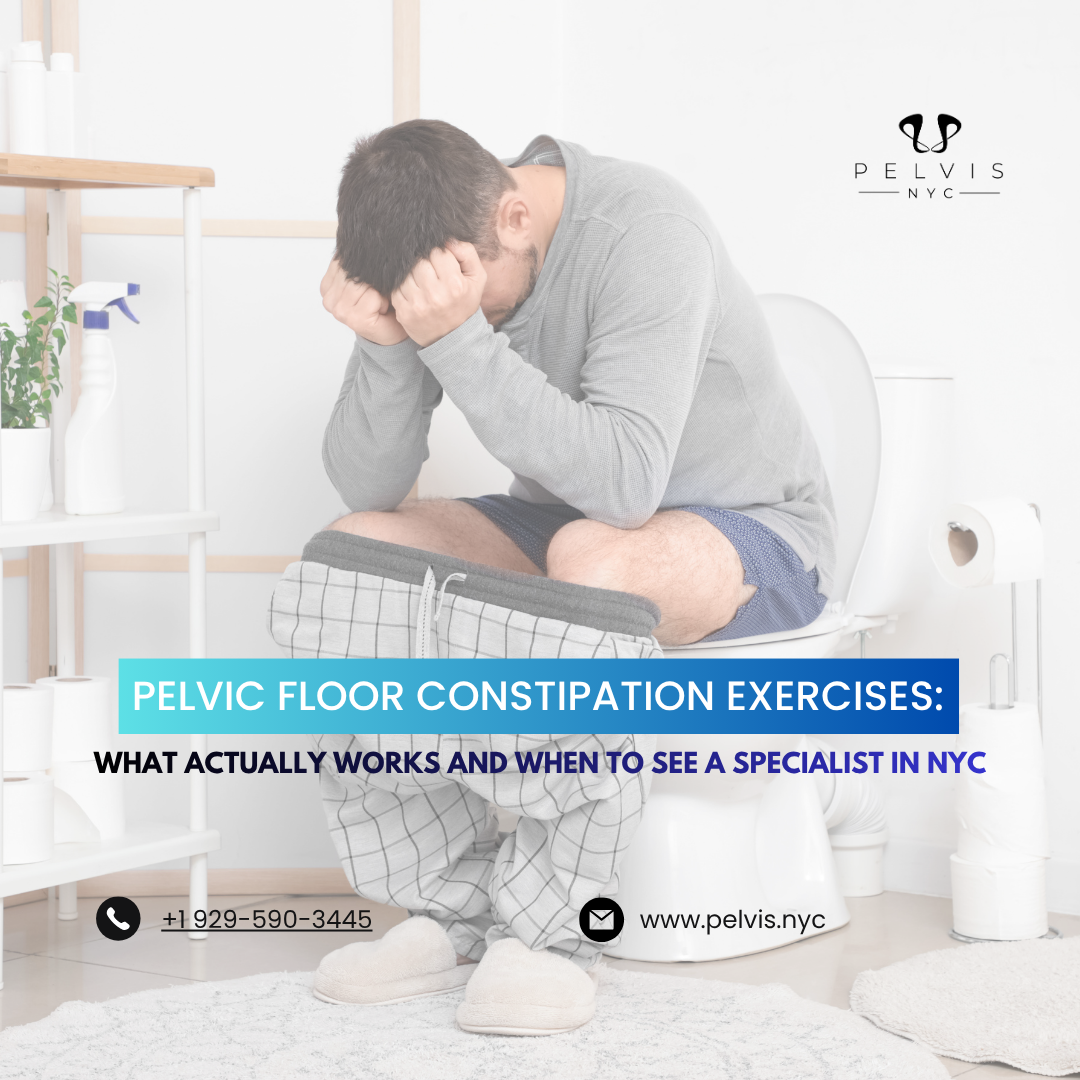
If you strain to have a bowel movement, feel like you never fully empty, or have been constipated for weeks despite changing your diet and drinking more water — your pelvic floor muscles may be the reason. Constipation is one of the most undertreated pelvic floor problems in New York City, and most cases don’t need laxatives or surgery. They need the right exercises and, in many cases, hands-on pelvic floor physical therapy.
Quick answer
Pelvic floor constipation exercises work by retraining the muscles around the rectum to relax — not squeeze — during a bowel movement. The most effective exercises for constipation include diaphragmatic breathing, the squatty potty position, pelvic floor relaxation (reverse Kegels), and abdominal massage. However, if your constipation is caused by dyssynergia (when your pelvic floor contracts instead of relaxing during defecation), exercises alone won’t resolve it. Pelvic floor physical therapy in NYC is the evidence-supported first-line treatment for this condition.
Not sure if your constipation is a pelvic floor problem? Book a free 15-minute teleconsultation with Dr. Adam — no referral needed to get started.Why are the pelvic floor muscles connected to constipation?
The pelvic floor muscles wrap around the rectum and anus and must fully relax for a bowel movement to happen. When those muscles are too tight — or, paradoxically, when they contract at the exact moment they should relax — stool can’t pass through easily. This pattern is called dyssynergia (also known as anismus or pelvic floor outlet obstruction) — a misfiring of the pelvic floor where the brain sends the wrong signal during defecation.
According to a review in Gastroenterology, dyssynergia accounts for approximately 25–50% of cases of chronic constipation — making it one of the most common, yet most overlooked, causes of this symptom. At our Chelsea clinic in New York City, we frequently see patients who’ve tried every dietary change imaginable and still can’t get relief, because the root cause is muscular, not nutritional.
Constipation can also be caused or worsened by pelvic floor hypotonicity (weakness), poor bowel habits, inadequate fiber or fluid intake, and structural changes like rectocele — a prolapse of the rectum into the back wall of the vagina in women. Identifying which type you have determines which exercises will actually help.
If you want to read how Pelvis NYC helped one man overcome chronic constipation, click the link!
The best pelvic floor constipation exercises
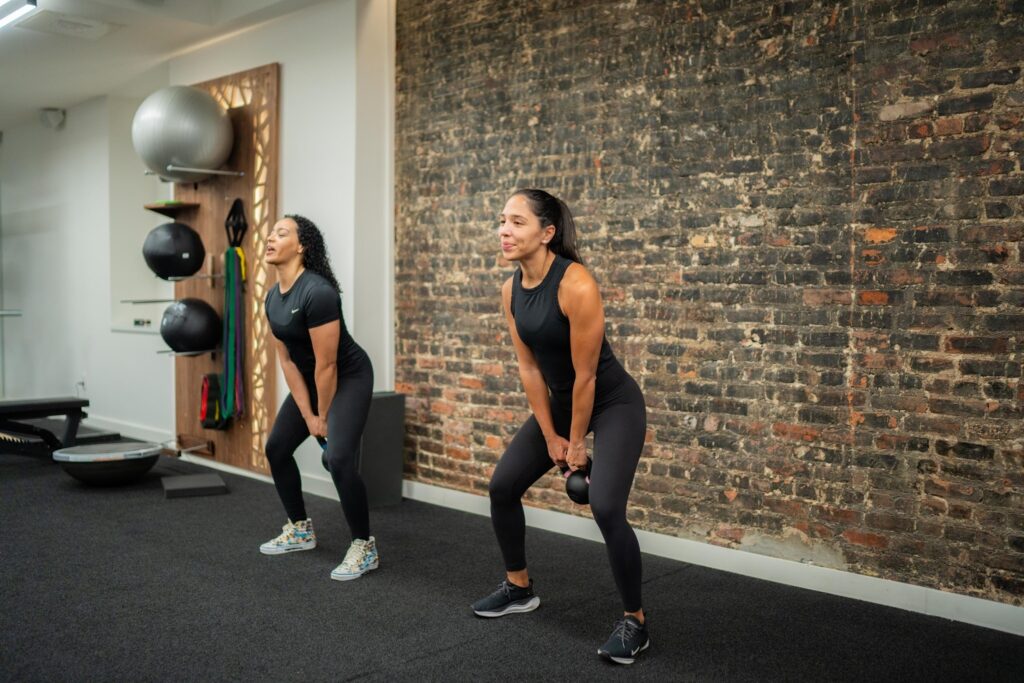
These exercises address the most common muscular patterns behind constipation. They are appropriate for most adults — but if your constipation involves rectal bleeding, significant pain, or a prolapse diagnosis, please consult a clinician before beginning.
Important: If your constipation is caused by dyssynergia, standard Kegel exercises (which strengthen and contract the pelvic floor) will make your symptoms worse — not better. The exercises below focus on relaxation and coordination, not strengthening.
Exercise 1 — diaphragmatic breathing (the foundation)
Diaphragmatic breathing — breathing deeply into the belly rather than the chest — is the single most important skill for pelvic floor relaxation. The diaphragm and pelvic floor move together: when you inhale deeply, the pelvic floor descends and relaxes; when you exhale, it lifts. This synchronized movement helps support the digestive system by reducing pelvic floor tension, which is essential for defecation.
- Sit upright or lie on your back with knees bent.
- Place one hand on your belly, one on your chest.
- Inhale slowly through your nose for 4 counts — let your belly and rib cage expand, not your chest.
- Exhale slowly through your mouth for 6 counts — feel your belly fall.
- Repeat for 5 minutes, twice daily. Use this breathing pattern on the toilet.
This kind of stretching-based breath work can support constipation relief and overall healthy bowel function when practiced regularly.
Exercise 2 — reverse Kegel (pelvic floor relaxation)
A standard Kegel contracts the pelvic floor. A reverse Kegel is the deliberate opposite — a controlled release and gentle bulge of the pelvic floor muscles outward and downward. This is the muscular movement that should happen during a bowel movement.
- Sit on a chair or the edge of the toilet.
- Take a deep diaphragmatic breath in.
- As you exhale, gently let your pelvic floor release — imagine “opening” around the rectum rather than holding or squeezing.
- Hold the release for 3–5 seconds. Do not bear down forcefully.
- Repeat 10 times. Practice daily — ideally while seated on the toilet.
You can also try a Figure 4 pose, with one leg crossed over the other, since it targets muscles around the pelvic floor and may make the release in the pelvic area easier to feel.
Exercise 3 — optimal toilet posture (squatty potty position)
The angle of your hips on a standard Western toilet keeps the puborectalis muscle — the sling of tissue that maintains the anorectal angle — partially contracted, which physically restricts stool passage. Elevating your feet changes this angle to a more natural squatting position, allowing full relaxation of the puborectalis.
- Place a stool, step, or toilet footrest (6–9 inches high) under your feet while seated on the toilet.
- Lean forward slightly, elbows on knees.
- Use your diaphragmatic breath and reverse Kegel to initiate movement.
- Never strain or hold your breath — both increase intra-abdominal pressure and worsen the problem over time.
Exercise 4 — abdominal massage for bowel motility
Abdominal massage stimulates peristalsis — the wave-like muscle contractions that move stool through the colon. A 2020 study in the Journal of Bodywork and Movement Therapies found that regular abdominal massage significantly reduced constipation symptoms and improved bowel movement frequency in adults with chronic constipation.
- Lie on your back with knees bent. Apply gentle pressure with your fingertips.
- Begin at the lower right of your abdomen (where the ascending colon starts).
- Massage slowly upward along the right side, then across the top (transverse colon), then down the left side (descending colon). This is the “I Love You” massage pattern.
- Use circular strokes, moderate pressure, for 5–10 minutes.
- Perform in the morning, ideally 20–30 minutes after eating when the gastrocolic reflex is most active.
Exercise 5 — coordination training on the toilet
This exercise trains the pelvic floor to relax on command during defecation — including learning to relax the anal sphincter at the same time, the core skill missing in dyssynergia.
- Sit on the toilet in the elevated foot position.
- Take a slow diaphragmatic breath in.
- On the exhale, simultaneously relax your pelvic floor (reverse Kegel) and use your abdominal muscles to create gentle downward pressure — not from holding your breath or trying to push forcefully.
- If nothing passes, do not strain. Breathe, reset, and try again; the goal is to reduce straining, not force stool out.
- Limit toilet time to 10 minutes. Prolonged sitting increases rectal pressure and weakens support over time.
At-a-glance exercise guide
| Exercise | Goal | Frequency | Best for |
| Diaphragmatic breathing | Pelvic floor relaxation | Twice daily, 5 min | Everyone — start here |
| Reverse Kegel | Release pelvic floor | 10 reps daily | Dyssynergia, hypertonic PF |
| Toilet posture (elevated feet) | Optimize anorectal angle | Every bowel movement | Everyone |
| Abdominal massage | Stimulate colon motility | 5–10 min each morning | Slow transit, bloating |
| Toilet coordination training | Retrain defecation reflex | Each toilet session | Dyssynergia, outlet obstruction |
When do pelvic floor constipation exercises stop working?
Self-directed exercises resolve mild to moderate constipation for many people — but they have clear limits. If your constipation is caused by dyssynergia, structural changes (rectocele, prolapse), or significant neuromuscular disruption from surgery or childbirth, some of the factors that can contribute to pelvic floor dysfunction, exercises practiced at home are unlikely to provide lasting relief without professional guidance.
See a pelvic floor physical therapist if these are signs self-directed care may not be enough:
- You’ve had chronic constipation (fewer than 3 bowel movements per week) for more than 3 months
- You strain significantly at every bowel movement
- You feel like stool is blocked or trapped even with the urge to go
- You need to manually assist bowel movements (digital evacuation)
- Constipation developed after childbirth, pelvic surgery, or a spinal injury
- You have associated pelvic pain, pressure, or prolapse symptoms
- Dietary changes, hydration, and laxatives have not helped
A healthcare provider or pelvic floor physical therapist can confirm whether pelvic floor dysfunction is the issue, and in more complex cases diagnosis may include anorectal manometry. If constipation comes with abdominal pain or you’re experiencing pain along with other pelvic symptoms, professional evaluation is especially important.
Our pelvic floor physical therapy program at Pelvis NYC uses biofeedback, internal manual therapy, and customized neuromuscular retraining to address the specific pattern driving your constipation — not a generic protocol. We treat both men and women, and same-gender care is always available.
What does pelvic floor PT for constipation look like at Pelvis NYC?
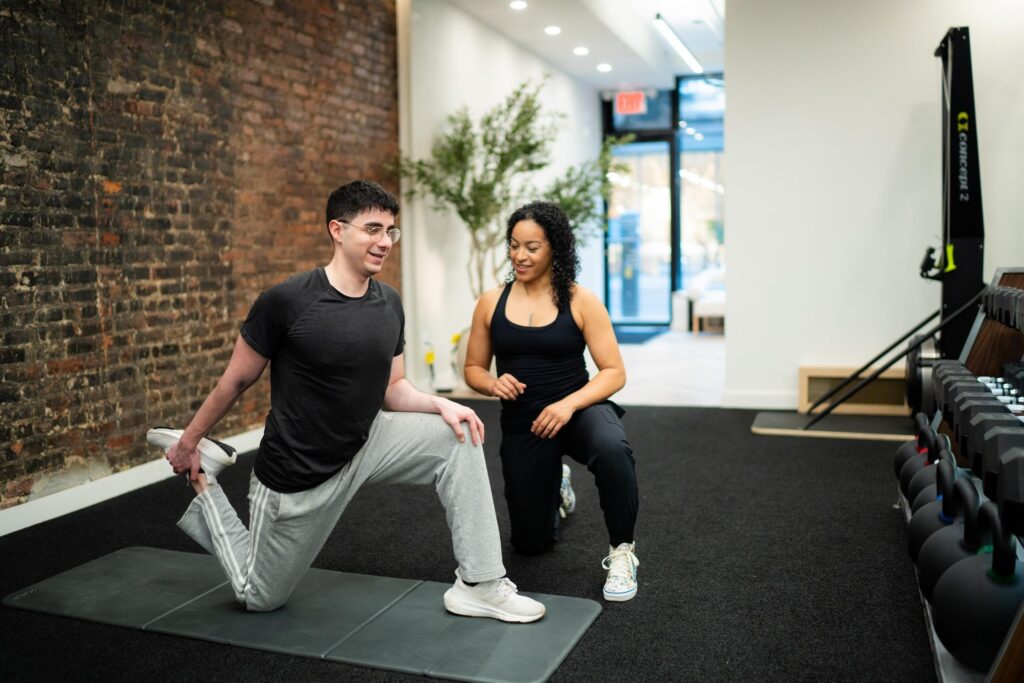
Pelvic floor physical therapy for constipation is evidence-supported and highly effective, and it can also help treat pelvic floor dysfunction more broadly. A 2021 systematic review in Techniques in Coloproctology found that biofeedback-assisted pelvic floor rehabilitation achieved a 70–80% success rate in patients with dyssynergia-related constipation — significantly outperforming laxatives and dietary interventions alone.
At our Chelsea, New York City clinic, treatment for constipation typically includes:
- Internal and external pelvic floor assessment — to identify whether muscles are too tight, too weak, or poorly coordinated, and when relevant to assess related pelvic organs, including the bladder
- Biofeedback training — real-time visual or auditory feedback that teaches you to relax the pelvic floor on command, with a trained therapist to lead the session, help you find the correct muscles, and make sure you do the exercises correctly
- Manual therapy — hands-on release of myofascial restrictions around the pelvic floor and abdomen
- Bowel habit retraining — behavioral strategies to normalize bowel timing, posture, and defecation mechanics
- Telehealth follow-up — ongoing support between visits through our telehealth program
Medications are sometimes part of a broader care plan, but they are not the main focus of pelvic floor rehab.
Most patients with dyssynergia see meaningful improvement within 6–8 sessions. Outcomes are consistently better when treatment begins before the pattern becomes deeply habitual and can also improve bladder function in patients with combined bowel and urinary symptoms — so earlier referral is always better.
Frequently asked questions
Are Kegel exercises good for constipation?
Standard Kegel exercises — which strengthen and contract the pelvic floor — are generally not recommended for constipation and can make symptoms worse if the underlying problem is a pelvic floor that’s too tight (hypertonic). In contrast, pelvic floor exercises for constipation should be relaxation-based rather than strengthening-based: reverse Kegels, diaphragmatic breathing, and coordination retraining. A pelvic floor assessment will determine which type of exercise is appropriate for you. Doing them correctly matters more than doing more repetitions.
Can pelvic floor dysfunction cause chronic constipation?
Yes — and it’s one of the most common causes of constipation that doesn’t respond to dietary changes or laxatives, and symptoms may include the bowels feeling blocked even when stool reaches the rectum. Dyssynergia, in which the pelvic floor contracts instead of relaxing during defecation, directly blocks stool passage. Pelvic floor physical therapy with biofeedback has a 70–80% success rate in treating dyssynergia-related constipation.
How long do pelvic floor constipation exercises take to work?
With consistent daily practice, plus good hydration and body awareness, most people notice improvement in bowel movement frequency and ease within 2–4 weeks. If you’re working with a pelvic floor PT for dyssynergia, clinical improvement typically occurs within 6–8 sessions. The exercises must be done correctly — the wrong technique or poor coordination with your body can slow progress or worsen symptoms.
Do I need a referral to see a pelvic floor PT in NYC for constipation?
No referral is required. New York State’s direct access law lets you book a pelvic floor PT appointment without a physician’s referral. You can also start with a free 15-minute teleconsultation at Pelvis NYC to discuss your symptoms before committing to an in-person visit.
Is pelvic floor constipation therapy different for men and women?
The underlying exercises and principles are similar, but the assessment and some treatment techniques differ based on anatomy. Pelvis NYC treats both men and women, and uses a same-gender care model — male patients are always seen by a male clinician. Men are significantly underdiagnosed with pelvic floor-related constipation despite experiencing it at comparable rates.
What’s the difference between pelvic floor constipation and slow transit constipation?
Slow transit constipation occurs when the colon doesn’t move stool through efficiently — often due to nerve or motility issues. Pelvic floor constipation (outlet obstruction or dyssynergia) occurs when stool reaches the rectum but can’t pass through the pelvic floor. Regular movement can also help prevent constipation, and a common benchmark is 150 minutes of moderate exercise each week. Cardio supports gut motility by increasing blood flow to abdominal organs. For example, walking 20–30 minutes, 3–4 times a week can stimulate gut motility and help relieve constipation. Both can coexist. A pelvic floor assessment distinguishes the two, which is important because the pelvic floor muscles also support nearby organs and the treatments differ significantly.
If pelvic floor constipation exercises haven't given you lasting relief, it's time for a proper assessment. Schedule your first appointment at Pelvis NYC — 110 West 17th Street, Chelsea, New York City — or call (929) 590-3445. We treat men and women in a judgment-free, same-gender clinical environment.